📅 Published: June 16, 2026
✍️ By: URMYWO Editorial Team
🏷️ Baby Toys, Sensory Play, Child Development, B2C

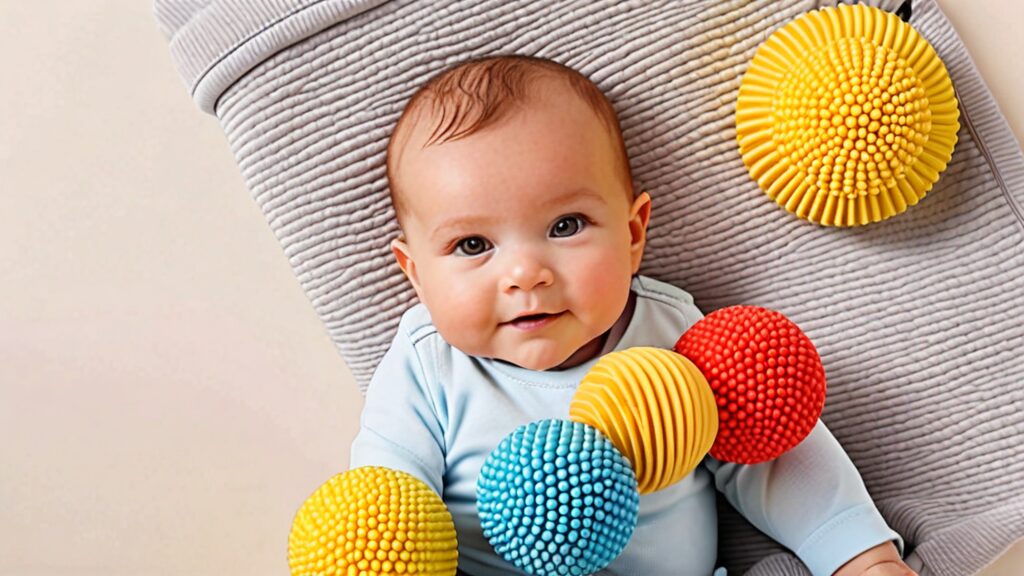
In the first three years of life, a baby's brain forms over 1 million neural connections every second. Every touch, sound, sight, smell, and movement your baby experiences literally builds the architecture of their brain. This is why sensory play isn't just "fun time" — it's the engine of early cognitive, motor, and emotional development.
But what exactly is sensory play? Which toys actually support sensory development? And how do you match sensory activities to your child's developmental stage without spending a fortune on specialized equipment? This guide answers every question, with practical toy recommendations for ages 0-3.
What Is Sensory Play and Why Does It Matter?
Sensory play is any activity that stimulates a child's senses: touch (tactile), sight (visual), sound (auditory), smell (olfactory), taste (gustatory), movement (vestibular), and body awareness (proprioception). When a baby squeezes a crinkly fabric book, splashes in a water table, or runs their fingers through a bin of dried beans, their brain is firing on all cylinders.
Research from the Harvard Center on the Developing Child confirms that sensory-rich experiences in early childhood strengthen neural pathways, improve memory retention, support language development, and build the foundation for more complex learning — including math, reading, and problem-solving — later in life.
Key Developmental Benefits of Sensory Play
- Cognitive development — Comparing textures, temperatures, and weights builds classification and reasoning skills
- Fine motor skills — Grasping, squeezing, scooping, and pouring strengthen the small muscles needed for writing
- Gross motor skills — Crawling through sensory paths, reaching for hanging toys, and balancing build coordination
- Language development — Describing sensations ("bumpy," "cold," "soft") builds vocabulary naturally
- Emotional regulation — Sensory activities like water play or kinetic sand have a calming, almost meditative effect on young children
- Social skills — Shared sensory bins and cooperative play teach turn-taking and parallel play skills
💡 Pro Tip: You don't need expensive equipment for sensory play. A plastic tub filled with dry rice and a few scoops provides hours of developmental stimulation. The key is variety and supervision — rotate materials every week to keep the novelty fresh.
Sensory Toys by Age: What Your Baby Needs at Each Stage
Not all sensory toys are appropriate for every age. A 3-month-old's sensory needs are completely different from a 2-year-old's. Here's your stage-by-stage guide:
0-6 Months: The World Through Senses
Newborns and young infants explore primarily through touch, sound, and high-contrast vision. Their eyesight is still developing — they see bold patterns best (black and white, red) and are drawn to faces. At this stage, every sensory experience is brand new.
Best sensory toys for 0-6 months:
- High-contrast black and white cards or books — Place them 8-12 inches from baby's face during tummy time. The stark contrast stimulates visual cortex development.
- Soft rattles and grasping toys — Lightweight enough for tiny hands. The cause-and-effect relationship (shake = sound) builds early cognitive connections.
- Crinkly fabric books — The tactile crinkle sound and varied fabric textures engage both auditory and tactile senses simultaneously.
- Teething toys with multiple textures — Babies explore heavily with their mouths. Silicone teethers with ridges, bumps, and varied firmness provide rich oral-sensory input.
- Activity gyms with hanging toys — Encourage reaching, batting, and eventually grasping. Look for gyms with mirrors (babies love faces) and varied hanging objects.
6-12 Months: Active Exploration Begins
Once babies can sit independently and begin crawling, their sensory world expands dramatically. They're now mobile explorers — touching, mouthing, banging, and dropping everything within reach. This is the golden age of cause-and-effect discovery.
Best sensory toys for 6-12 months:
- Stacking cups and rings — The classic for a reason. Nesting, stacking, and knocking down builds spatial reasoning, hand-eye coordination, and an intuitive understanding of size relationships.
- Musical instruments (baby-safe) — Shakers, baby drums, and xylophones introduce rhythm and auditory discrimination. Look for instruments designed for mouthing.
- Sensory balls — Balls with bumps, ridges, and varied textures. Rolling a ball back and forth also teaches the earliest form of turn-taking.
- Wooden grasping toys — The natural warmth, weight, and grain of wood provides sensory feedback that plastic cannot replicate. Interlocking wooden rings are a Montessori favorite at this stage.
- Water play mats — Tummy-time mats filled with water and floating objects. Babies press and pat, watching the contents move — mesmerizing and educational.
12-24 Months: The Toddler Sensory Explosion
Toddlers are sensory sponges. Their language is emerging, their fine motor control is improving rapidly, and they're drawn to messy, immersive sensory experiences. This is the ideal age to introduce structured sensory play activities.
Best sensory toys for 12-24 months:
- Shape sorters and simple puzzles — Combine tactile exploration with problem-solving. The satisfying "click" of a correctly placed shape reinforces persistence.
- Play dough and modeling clay — Squishing, rolling, and pinching build hand strength. Add child-safe tools (plastic knives, rolling pins) for extended engagement. Always supervise.
- Push-and-pull toys — Combine gross motor movement with sensory feedback (clicking sounds, wobbling movements). Walkers with activity panels add fine-motor stimulation.
- Finger painting (edible-safe) — The ultimate tactile + visual sensory experience. Use yogurt-based paints for babies who still mouth everything.
- Sound-matching toys — Shaking eggs or cylinders with different fillings (rice, bells, sand) and matching by sound develops auditory discrimination.
2-3 Years: Advanced Sensory and Pretend Play
By age two, children are ready for more complex sensory experiences. Their attention span is longer, their language is richer, and they begin combining sensory play with imagination.
Best sensory toys for 2-3 years:
- Sensory bins — The MVP of toddler sensory play. Fill a shallow bin with dried beans, rice, pasta, sand, or water beads, then add scoops, funnels, and small toys. Themes (construction site, ocean, farm) add imaginative depth. Always supervise closely.
- Kinetic sand and play sand — Molds like wet sand but never dries out. The unique texture is deeply satisfying — many adults find it therapeutic too.
- Balance boards and stepping stones — Vestibular (balance) and proprioceptive (body awareness) input. Rocking, wobbling, and stepping build core strength and body confidence.
- Building blocks (wooden or magnetic) — Open-ended construction combines tactile exploration, spatial reasoning, and creative problem-solving. Magnetic blocks are especially satisfying for this age.
- Dress-up and texture play — Fabric squares with different textures (velvet, satin, corduroy, burlap) and simple costume pieces. Describe the sensations together to build sensory vocabulary.

Safety First: Choosing Sensory Toys That Are Truly Baby-Safe
Sensory play often involves small objects and loose materials, which means safety must be your top priority. Here's what to look for:
- Choke hazard awareness — Any object smaller than 1.25 inches (3.2 cm) in diameter is a choking hazard for children under 3. Use a choke tube tester. For sensory bins with small items, hands-on supervision is non-negotiable.
- Non-toxic materials — Look for toys labeled BPA-free, phthalate-free, and lead-free. For babies who mouth everything, food-grade silicone is the gold standard.
- Certification check — Reputable toys carry CPC certification (US), CE + EN71 marking (EU), or ASTM F963 compliance. These aren't just stickers — they mean the toy has passed rigorous third-party testing for chemical safety, mechanical hazards, and flammability. Read our complete toy safety standards guide for details.
- Durability — Sensory toys get heavy use. Check for loose parts, sharp edges, and flaking paint before each play session. Wooden toys should be sanded smooth with rounded corners.
- Cleanability — Sensory toys collect germs. Choose toys that can be easily wiped, washed, or sterilized. See our guide on how to clean and sanitize baby toys.
⚠️ Important: Water beads (Orbeez) are popular in sensory bins but pose a severe ingestion risk. They can expand inside a child's digestive tract, causing life-threatening blockages. If using water beads, they must be in a sealed, clear container the child cannot open — never loose in a bin. Many pediatricians recommend avoiding them entirely for children under 4.
DIY Sensory Play: Affordable Ideas for Every Budget
You don't need a dedicated "sensory room" or expensive equipment. Some of the best sensory experiences cost almost nothing:
- Rice bin — A pound of dry rice in a shallow plastic tub. Add measuring cups and small toys. Total cost: under $3.
- Bubble wrap stomp — Tape bubble wrap to the floor and let your toddler walk, crawl, and stomp. Auditory + tactile + gross motor = sensory trifecta.
- Nature sensory walk — Collect leaves, pinecones, smooth stones, and grass. Let your child touch and describe each texture. Free and endlessly varied by season.
- Spice painting — Mix cinnamon, turmeric, or paprika with a little water and let your child "paint" on paper. Natural scents add olfactory stimulation.
- Ice cube exploration — Freeze small toys inside ice cubes, then let your toddler melt them with warm water in a bin. Temperature play builds sensory vocabulary (cold, melting, wet).
For more ideas by developmental stage, see our baby toys by age guide and educational toys for toddlers guide.
Why URMYWO Sensory Toys Stand Out
At URMYWO, we design toys with sensory development as a core principle — not an afterthought. Every product in our baby and toddler collection is:
- Multi-textured — Combining smooth, ridged, bumpy, and soft surfaces for richer tactile feedback
- Developmentally staged — Clearly labeled by age range so parents know exactly what's appropriate
- Safety certified — CPC, ASTM F963, and EN71 testing on every batch, with certificates available upon request
- Open-ended — Designed for multiple ways to play, growing with your child from 6 months to 3+ years
Browse our Amazon store collection for best-selling baby and toddler toys with proven customer satisfaction. Each product includes detailed sensory-play suggestions on its product page.
🎨 Looking for High-Quality Sensory Toys?
Explore URMYWO's collection of CPC-certified sensory toys for babies and toddlers — designed by parents, tested by labs, loved by kids. Wholesale pricing available for daycare centers and retailers.
Shop Sensory Toys →