📅 Published: May 25, 2026
✍️ By: URMYWO Editorial Team
🏷️ Baby Toys, Developmental Toys, Parenting Guide

Walk into any baby store and you're confronted with walls of colorful toys, each promising to make your child smarter, happier, or more creative. The reality is simpler: the best baby toys are the ones that match your child's current developmental stage. A toy that's perfect for a 9-month-old might frustrate a 4-month-old — or bore a 15-month-old.
This guide maps toys to developmental milestones from birth to 24 months, so you can choose toys that genuinely support your baby's growth — and avoid wasting money on products that will be ignored after five minutes.
0–3 Months: Sensory Awakening
Newborns spend most of their time eating, sleeping, and getting used to being outside the womb. Their vision is blurry (they can focus best on objects 8–12 inches away), and they're just beginning to discover their own hands and feet.
Developmental Milestones
- Tracks objects with eyes (by 2–3 months)
- Begins to bat at dangling objects
- Turns head toward sounds
- Brings hands to mouth
- Grasps reflexively
Best Toy Types
- High-contrast black-and-white cards or books — Newborns see high-contrast patterns best
- Soft rattles — Gentle sound helps develop auditory tracking
- Unbreakable mirrors — Babies are fascinated by faces (including their own)
- Soft fabric books — Crinkle pages introduce different textures
- Activity gyms with hanging toys — Encourages visual tracking and batting
3–6 Months: Discovery Through Touch & Mouth
This is when babies become active explorers. Everything goes in the mouth — because that's how babies learn about texture, shape, and temperature. Hand-eye coordination improves dramatically, and many babies begin reaching and grasping intentionally.
Developmental Milestones
- Reaches for and grasps objects intentionally
- Transfers toys from one hand to the other
- Rolls from tummy to back (and vice versa)
- Brings everything to mouth for exploration
- Responds to own name
Best Toy Types
- Teething toys — Silicone or natural rubber teethers provide relief and oral exploration
- Soft blocks — Easy to grasp, stackable, and safe to mouth
- Wrist rattles and foot finders — Helps babies discover their own body parts
- Sensory balls — Textured surfaces stimulate tactile development
- Musical toys — Simple shakers or bells encourage cause-and-effect learning
6–9 Months: Sitting, Reaching, Exploring
Once babies can sit independently, a whole new world of play opens up. They can use both hands to manipulate objects, and they begin to understand object permanence — the idea that things still exist even when out of sight.
Developmental Milestones
- Sits without support
- Rakes small objects with fingers
- Starts crawling or scooting
- Looks for dropped or hidden objects
- Bangs objects together
Best Toy Types
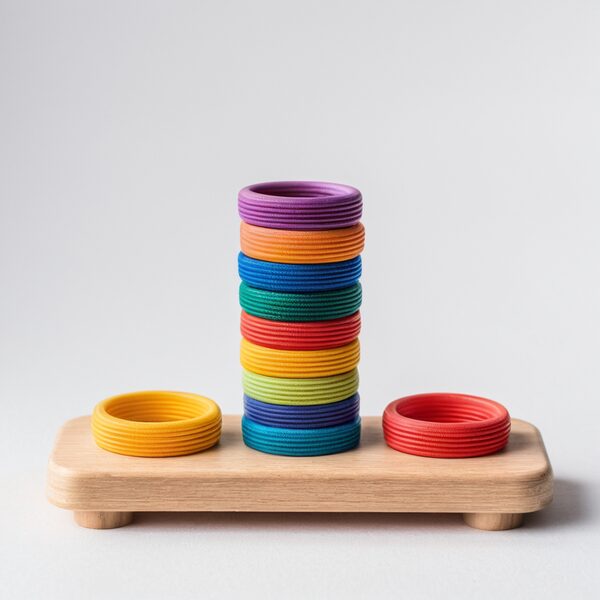
- Stacking cups or rings — Classic Montessori toy that builds spatial awareness and motor control
- Activity cubes — Multiple activities (doors, sliders, spinners) on one toy
- Object permanence boxes — Drop a ball in, watch it roll out — simple but profound learning
- Cause-and-effect toys — Push a button, hear a sound; press a lever, see a pop-up
- Baby-safe mirrors — Self-discovery and social-emotional development
9–12 Months: The Mobile Explorer
Crawling, pulling up, and sometimes cruising (walking while holding furniture) — this stage is defined by mobility. Babies are also developing the pincer grasp (thumb and forefinger), which opens up finer manipulation.
Developmental Milestones
- Pulls to stand and cruises along furniture
- Pincer grasp develops (picks up small items with thumb and finger)
- Understands object permanence fully
- Imitates gestures and sounds
- Responds to simple verbal requests
Best Toy Types
- Push-and-pull toys — Encourages walking practice
- Shape sorters — Problem-solving and fine motor development
- Board books with flaps — Builds vocabulary and object permanence understanding
- Nesting and stacking toys — More complex spatial challenges
- Ball drop toys — Cause-and-effect and hand-eye coordination
12–18 Months: The Toddler Thinker
Now walking (or almost), toddlers are busy figuring out how the world works. They engage in simple pretend play, imitate adults, and begin solving problems consciously. Language explodes during this period.
Developmental Milestones
- Walks independently (may still be unsteady)
- Says 3–10 words (receptive language far exceeds expressive)
- Points to objects and body parts when named
- Engages in simple pretend play (feeding a doll, talking on a toy phone)
- Shows interest in other children
Best Toy Types
- Simple puzzles — 2–4 piece peg puzzles for shape recognition
- Pretend play sets — Toy kitchen, tool bench, or doll accessories
- Ride-on toys — Foot-to-floor cars or rockers for gross motor development
- Bath toys — Cups, squirters, and floating toys for water exploration
- Simple musical instruments — Drums, xylophones, and maracas for rhythm exploration
18–24 Months: The Independent Problem-Solver
Two-year-olds are capable of surprisingly complex play. They follow simple multi-step instructions, sort objects by category, and engage in increasingly elaborate pretend scenarios. This is also the peak period for developing fine motor control.
Developmental Milestones
- Runs, climbs, and kicks a ball
- Says 50+ words and combines 2-word phrases
- Sorts objects by color, shape, or size
- Engages in multi-step pretend play
- Shows clear hand preference
Best Toy Types
- Advanced shape sorters and puzzles — 8+ piece puzzles and multi-shape sorters
- Building blocks (larger sets) — DUPLO-style bricks for creative construction
- Color and shape matching games — Early classification and categorization
- Art supplies — Washable crayons, finger paints, and play-dough for creative expression
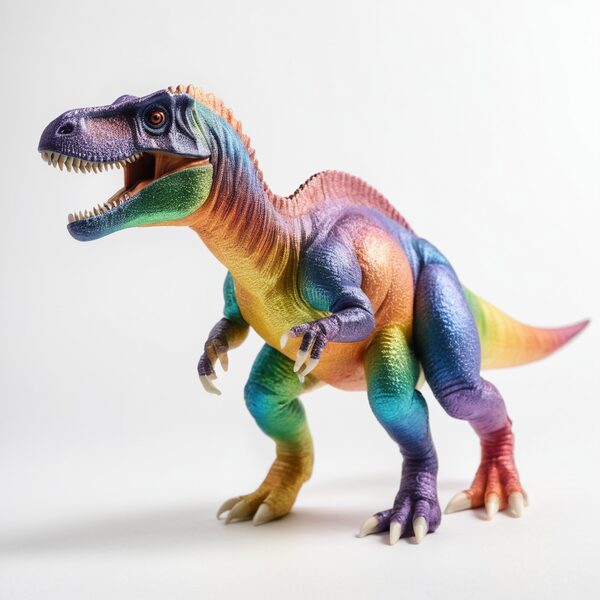
- 3D printed articulated toys — Flexi animals and fidget toys that encourage imaginative storytelling
Safety Checklist for Every Age
No matter what toys you choose, follow these safety guidelines:
- Always check age labels — Age recommendations are based on safety, not ability
- Watch for small parts — Anything that fits through a toilet paper tube is a choking hazard for children under 3
- Inspect for sharp edges — Run your fingers along edges and corners before giving a toy to your baby
- Choose certified materials — Look for toys labeled BPA-free, phthalate-free, and non-toxic
- Check for recalls — Visit CPSC.gov to see if any of your toys have been recalled
URMYWO toys are tested by CPSC-accredited laboratories and carry CPC, ASTM F963, and EN71 certifications for your peace of mind. Browse our full collection of age-appropriate toys or contact us with any safety questions.
🧸 Discover Toys Your Baby Will Love
From Montessori stacking toys to 3D printed animal sets — URMYWO's collection is designed with developmental milestones in mind. Every toy is safety-certified and built to last.
Shop Baby Toys →