Most first samples are wrong for the same reason: the factory was asked to interpret, not to build. A proper tech pack turns design intent into numbers a toolmaker can cut and an inspector can measure — and it is the cheapest tooling insurance you will ever buy.
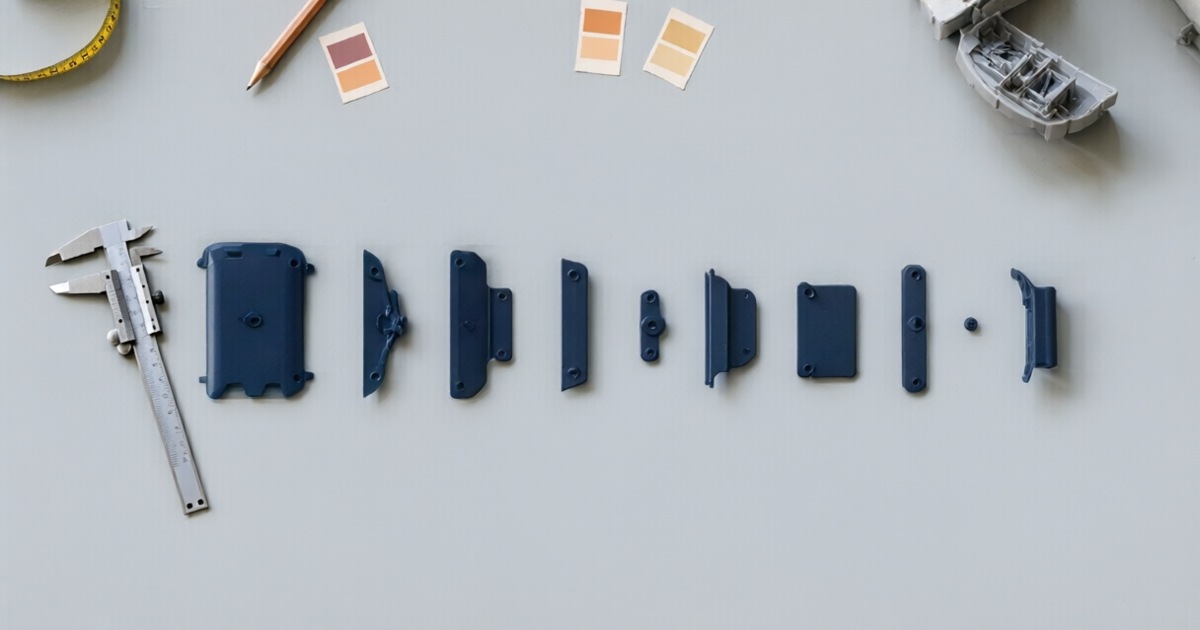
The most expensive sentence in toy manufacturing is "you know what I mean". It comes in a chat message with a sketch, a photo of a competitor's product and a target price. Three weeks later a sample arrives that is technically the thing you described and commercially the wrong product: too small, wrong gloss, a battery door that needs a screwdriver, a box that will not survive a retail shelf.
Nobody was dishonest. The factory built what it read. A photo and a price are not a specification, and no factory can tool against intent.
A tech pack is the fix. In apparel it is a standard document; in toys it is usually improvised, which is why toy development cycles run long and sample rounds multiply. This is the version we send to brands before a first tooling payment — the sections that matter, the numbers that have to be on the page, and the parts first-time importers leave out.
📊 The economics: a sample round costs three to five weeks and a courier bill. A tooling change after T1 costs the mould modification and the delay. A change after mass production costs the mould, the inventory, and possibly the packaging. Nearly every one traces back to a line that was not in the tech pack.
A tech pack is the document that lets three parties do their job without talking to you: the toolmaker cuts steel from the 3D files and tolerance notes; the moulding or sewing floor sets up from the material and colour spec; QC inspects against the measurement table. It is also what your lab reads when scoping a test plan, and what a retailer's compliance team asks for when they want to know what the product actually is. It is not a mood board, a rendering, or a competitor's product with "like this but cheaper" attached — the test is whether a factory you have never spoken to could build from this document alone, and an inspector could decide whether what they built is correct.
Order matters, because it mirrors the factory's own workflow: what is it, what is it made of, how big, what colour, what does it have to pass, how is it packed. Write it in that sequence and the questions come back in a manageable batch instead of one a day for a fortnight.
| Section | What goes in it | What breaks when it is missing |
|---|---|---|
| 1. Product summary | One paragraph: what the toy is, who plays with it, age grade, primary play pattern, target retail price | Factory optimises cost in the wrong place — thin walls, cheap mechanics where the play pattern depends on them |
| 2. Bill of materials | Every component with material, grade, colour, finish, and whether it is off-the-shelf or custom | Substituted resin, wrong hardness, plush pile that fails a pull test |
| 3. Assembly structure | Exploded view, part count, fastening method, whether it must be disassemblable for recycling or batteries | Hidden screws, glued assemblies that cannot be serviced, seams in the wrong place |
| 4. Dimensions and tolerances | Critical dimensions with tolerance, wall thickness, draft angles, fit classes for mating parts | Parts that do not close, rattling joints, a mould that needs cutting twice |
| 5. Materials and finish | Resin type and grade, fabric composition and weight, hardness, surface texture, gloss level | Gloss where you wanted matte, a hardness that fails the bite test, fabric that pills |
| 6. Colour specification | Pantone or master chip reference per part, plus which parts must match each other in the same light | Batch-to-batch colour drift; two halves of one toy that are visibly different whites |
| 7. Compliance annex | Target markets, age grade justification, standards to test against, labeling and warning requirements | Retesting after the fact, or a product that cannot legally be sold where you planned to sell it |
| 8. Packaging | Carton structure, dimensions, print process, barcode and legal panel, master carton configuration | Retail rejection on shelf, damaged goods in transit, a carton that misses the container cube |
| 9. Quality standard | Measurement table, cosmetic acceptance criteria, functional test, AQL level | Inspector and factory disagree on what "good" means; you pay for both interpretations |
| 10. Schedule and approvals | Sample dates, tooling lead time, production window, who signs off what | Missed retail windows, silent changes approved by nobody |
This is the section first-time importers write thinnest, and the one a toolmaker reads most closely. A drawing that says "about 120mm" gets built at whatever the mould produces, and then you spend a week arguing about whether 118mm is acceptable.
Three habits fix most of it.
Dimension only what matters, and tolerance it. Not every dimension needs a tolerance — that is expensive and the factory will ignore the ones that do not matter anyway. Identify the critical ones: anything that mates with another part, anything that must fit a packaging cavity, anything a safety test measures, and anything the consumer notices by feel. State those with an explicit tolerance; mark the rest as reference.
Design for the process, not against it. Injection moulding needs draft on every vertical wall or the part drags on ejection, and wall thickness should be as uniform as the design allows — thick sections sink, thin sections short-shot. Living hinges, snap fits and press fits each have their own rules, and a toolmaker will quietly "fix" geometry to make the mould work, which is how a part ends up functionally different from what you approved. Write the intent down: which fit is permanent, which moves, which comes apart.
Give files the factory can cut from. A STEP file, not a rendering. A native CAD file, not a screenshot. If your designer works in a mesh-based tool, deliver a solid model conversion and confirm the toolmaker accepts it before tooling starts — a five-minute question that prevents a two-week rebuild. If volume is low and tooling is the wrong answer, our comparison of 3D printing versus injection moulding covers where the crossover sits.
"High quality plastic" is not a material specification. It is an invitation for the factory to use whatever is in the silo that week, and it will pass every test you did not specify.
| Write this | Not this | Why it matters on a toy |
|---|---|---|
| Resin family and grade, e.g. ABS, food-contact-grade PP, TPE with stated hardness | "Plastic", "eco plastic", "new material" | Impact strength, chemical resistance and phthalate risk all follow from the resin, not from the price |
| Shore hardness for soft parts (teethers, grips, tyres) | "Soft feel" | Hardness decides bite resistance and whether a small part detaches |
| Fabric composition and weight per unit area, plus pile height for plush | "Soft plush" | Pile length drives the fibre loss and flammability results, and the hand-feel the buyer evaluates |
| Surface finish: texture grade or SPI-style finish reference, and gloss level | "Matte" | Gloss is the most common cosmetic rejection in tooling approvals |
| Recycled content percentage and certification, if you claim it | "Sustainable" | An unsubstantiated environmental claim is a legal exposure in the EU and increasingly in the US |
For kids' products, add one line per component naming the material as it will appear on the test request. The lab tests the material it is given; if the factory substitutes resin between the test sample and mass production, your report describes a product you did not ship. The fix is a clause, not a process: no material substitution without written approval and retest at the factory's cost.
Colour is where design intent and manufacturing reality meet hardest, because plastic colour is not ink. It is pigment in resin, and it shifts with the resin, the masterbatch let-down ratio, part thickness, mould temperature and the light the buyer is standing under.
Write the reference as a physical standard: a Pantone number for the target, and a signed master chip per part for the approved result, approved under the light the product will be sold under — a warm retail spotlight makes a cool grey look beige. If two parts must match, say so explicitly, because "same colour family" is how you end up with a lid half a shade off the body and a rejected lot. For painted or printed surfaces, specify the substrate as well as the ink and require the factory to name the adhesion test: paint that passes on ABS can fail on PP with no visible difference on the sample you approved.
Compliance decisions belong in the tech pack, not in a conversation after the sample is approved. Three items to put on the page:
⚠️ Do not outsource the age grade to the factory. A factory will often grade a product up to avoid a test, or down to avoid a warning. Either is your liability, not theirs, and the label on the box is the first thing a regulator reads. Decide the age grade yourself, write the justification, and have the lab confirm it against the actual construction.
Regulatory text changes: verify any standard named here against the official text before you brief tooling on it.
Packaging is usually handled as a separate project after the product is approved, which is backwards. The carton decides the container cube, the cube decides freight per unit, and the retail format decides whether your product can go on a shelf at all. Our custom packaging guide covers the structure in depth; in the tech pack you need four things.
A sample approved without its packaging is half a sample — approve both together, because a packaging change after the print run cannot be recovered.
Tech packs fail at approval gates more often than at the drawing stage, because "looks good" is not an approval. Each stage exists to freeze a decision so the next one cannot quietly reopen it.
| Stage | What it proves | What you must sign off in writing |
|---|---|---|
| Concept / 3D review | The geometry is buildable and the play pattern works | Final 3D files, part count, assembly method, target cost band |
| Prototype (often 3D printed or hand-made) | Scale, ergonomics, and whether the idea is fun | Proportions, grip, mechanism, colour direction — with the explicit note that surface finish is not representative |
| Tooling and T1 samples | The mould produces a part that meets the drawing | Dimensional report against the measurement table, cosmetic standard, and any mould corrections |
| T2 / pre-production samples | Corrections are in, and the process is repeatable | Colour chips, material confirmation, packaging proofs, test samples released to the lab |
| Golden sample | This exact build is the reference for mass production | A signed, dated physical sample held by both parties, plus the sealed specification it represents |
| Production and inspection | The line can reproduce the golden sample at volume | Inspection report against the same measurement table, with AQL agreed in advance |
The golden sample is the most under-used instrument in toy sourcing. Approve one, sign both copies, keep one at the factory and one at home, and every later argument about "within standard" has a reference. Without it, acceptance criteria drift toward whatever the line is currently producing. Our inspection guide shows how that reference is used on the floor.
Freeze the paperwork at the same time. Every document carries a revision number and a date, only the latest revision is valid, and every change goes through one note stating what changed, why, what it affects and who pays — a change the buyer requests after tooling is normally a buyer cost, and saying so is how the relationship stays clean. If you work through an agent, add one more rule: the factory receives documents from a single source, because duplicate channels are how a superseded drawing gets cut into steel.
A tech pack is not paperwork for its own sake — it moves decisions from the factory floor back to your desk, where they cost nothing. Every dimension you leave vague, every material described with an adjective, every colour named instead of referenced, becomes a decision someone else makes on your behalf and bills you for later.
Write the ten sections, tolerance only what matters, name the resin and the Pantone, put compliance and packaging inside the document rather than after it, and sign a golden sample. Do that on the first program and you will wonder why the last ones needed four sample rounds.
— Jack Zhang, URMYWO
Send the idea, the target market and the price you need to hit. We will come back with the part structure, tooling approach, MOQ reality, and the questions your tech pack still has to answer.
Start an OEM Discussion →