📅 Published: August 24, 2026
✍️ By: URMYWO Editorial Team
🏷️ 3D Printing, Manufacturing, MOQ, Sourcing, Cost Analysis
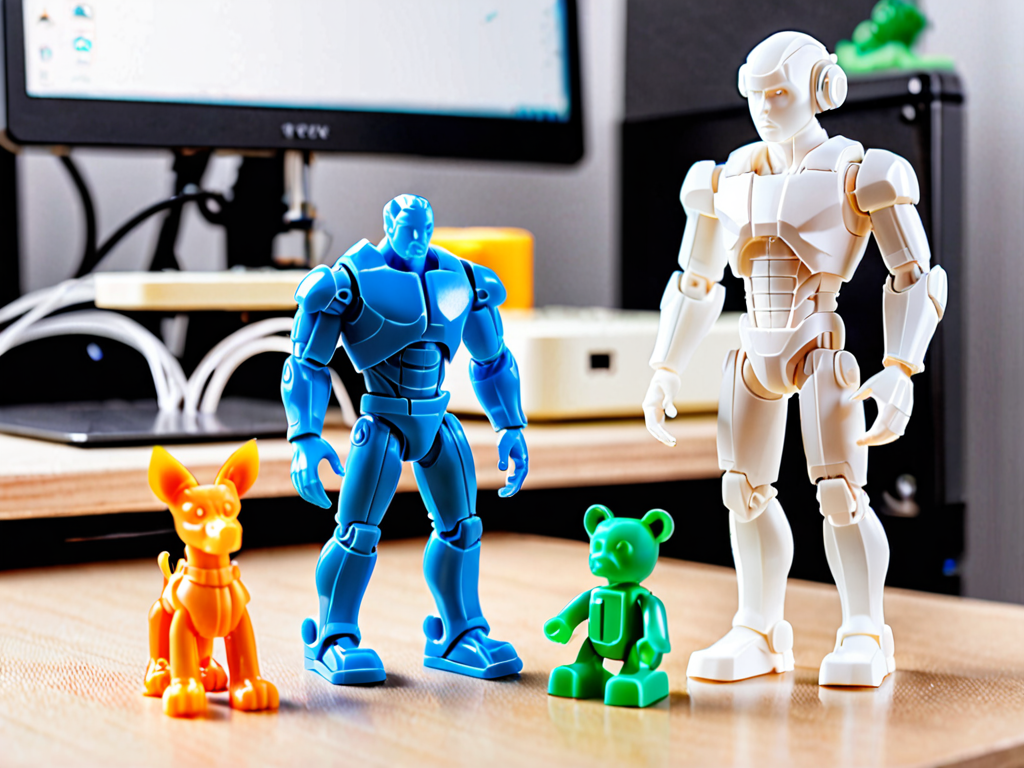
Every importer eventually faces the same question: should this toy be 3D printed or injection molded? The answer isn't a preference — it's arithmetic. 3D printing has no mold cost and no minimum order, but a higher per-unit price. Injection molding has a brutal upfront mold investment, but per-unit costs that fall to pennies at scale. Between those two curves lives the single most important manufacturing decision a toy brand makes.
This guide gives you the actual numbers: cost per unit at every volume tier, the quality differences that matter at retail, and the three scenarios where 3D printing wins outright — plus the trap of using 3D printing when you should have cut a mold.
📊 The Bottom Line Up Front: For volumes under ~1,000-3,000 units, 3D printing is usually cheaper overall. For volumes above ~5,000-10,000 units, injection molding wins on cost per unit almost every time. But cost is only half the story — 3D printing wins on speed, customization, and risk; injection molding wins on unit economics, surface quality, and scale. Your product's price point and retail channel decide which matters more.
The Cost Curves: Where Each Technology Wins
Let's model a typical toy figure, roughly 10-15 cm tall, single-part body with a few accessories. Here's what the numbers actually look like through a Chinese manufacturing partner:
- Injection molding — mold cost: A single-cavity production mold for a simple figure runs $2,000-8,000. Complex geometries, undercuts, and multi-part assemblies push it to $10,000-30,000+. This is paid once, up front, before a single unit is produced
- Injection molding — per-unit cost: At 10,000 units, a simple figure costs $0.40-1.20 per unit including material and labor. At 100,000 units, that can fall below $0.30
- 3D printing — per-unit cost: A comparable figure in PLA or resin costs $3-15 per unit depending on size, material, and post-processing — at any volume. Economies of scale are modest (batch printing helps, but the material cost per gram doesn't collapse)
- 3D printing — setup cost: Zero tooling. You can change the design between batches at no cost — which is also its superpower
The crossover point: Add mold cost to per-unit injection costs and compare against 3D printing's flat per-unit cost. With a $5,000 mold and $1.00 injection unit cost versus $6.00 3D printed unit cost, the crossover lands near 1,000 units. With a $20,000 mold and $0.50 versus $8.00, it's around 2,700 units. The honest rule of thumb: below ~1,000 units, 3D printing almost always wins; above ~5,000, injection molding almost always wins; between 1,000-5,000, do the math on your specific part.
💡 Pro Tip: Ask your supplier for a two-line quote: "mold cost + per-unit at 1K/3K/10K" and "3D printed per-unit at the same volumes." Plot both curves. The intersection is your decision point. URMYWO quotes both formats routinely — we'd rather you see the crossover than guess at it.
Quality: What's Actually Different at Retail
Both technologies produce sellable toys — but the products are not the same, and shoppers notice. Here's the honest quality comparison:
- Surface finish: Injection molded parts come out of the mold with a smooth, glossy finish — the "factory toy" look. 3D printed parts show layer lines (FDM) or require sanding/priming (resin). At retail, layer lines read as "rough" to parents — though for some styles (art toys, collectibles, mechanical-looking designs) they're actually a feature
- Detail resolution: Resin 3D printing beats injection molding on fine detail — intricate sculpts, organic shapes, and complex textures. If your product is an art piece (vinyl-adjacent collectibles, display figures), resin printing can exceed mold quality. FDM is the weak end: chunky layers limit fine detail
- Material strength & safety: Injection molding uses ABS, PP, and food/safety-grade plastics with decades of certification data (EN71, ASTM F963, CPSIA). 3D printing materials — especially PLA — are safe but softer and more brittle; resin requires post-curing and careful handling. For baby/toddler toys that get chewed, injection molded ABS/PP is the safer, more proven choice
- Consistency: Injection molding produces identical parts, every time, from unit 1 to unit 100,000. 3D printing has more variance: layer adhesion, temperature shifts, and calibration drift can create subtle differences between batches. For strict QC requirements, molding wins
- Durability: Molded parts handle drops, chewing, and rough play. 3D printed parts — especially FDM — can delaminate along layer lines under stress. Resin parts are brittle and can shatter
⚠️ Watch Out: If your target market is under 3 years old, the safety bar is unforgiving: small-parts testing (EN71-1 / ASTM F963 choking tests), chemical migration limits (EN71-3), and phthalate rules. 3D printed toys can pass these — but you must use certified materials, document your post-processing, and test every material change. A resin that prints beautifully may fail chemical migration testing. Never assume; test the actual production material.
Scenario 1: 3D Printing Wins — Low Volume, High Margin, Customization
3D printing is the right answer when any of these describe your situation:
- You're testing a market: New brand, unproven design, or a Kickstarter-style launch. 3D printing lets you produce 200-2,000 units, sell them, and learn — without a $20,000 mold bet. If it flops, you're out a few thousand dollars, not a mold investment
- Your product is personalizable: Name plaques, custom figurines, made-to-order collectibles. 3D printing is the only technology where unit #1 can differ from unit #2 at zero cost. This is the fastest-growing niche in the category — personalized toys command 2-3x the price of stock equivalents
- You need speed: Design to shippable product in 5-15 days — no mold waiting, no tooling trials. For trend-driven toys (TikTok virality, movie tie-ins), this speed advantage is decisive
- Complex geometry: Lattice structures, interlocking organic shapes, and designs that would need 5+ mold slides or inserts. 3D printing handles geometry that molding can't do economically
- Premium positioning: The "3D printed" label itself is a differentiator. Art toys, architectural models, and collector pieces sell the technology as part of the story
Scenario 2: Injection Molding Wins — Volume, Cost, and Compliance
Injection molding is the answer when:
- Your volume is real: Any SKU you expect to sell 5,000+ units of, per design, per year. Retailers, Amazon FBA, and wholesale distribution all land here. The per-unit savings at scale repay the mold investment within one to two production runs
- Price point is competitive: If your retail price is under ~$25, your unit cost must be under ~$4-5 — and that's molding territory. A $6-15 3D printed unit cost simply doesn't leave margin after freight, tariffs, and retail markup
- You need certified, repeatable safety: Baby toys, teethers, and anything mouth-contact. Injection molded food/safety-grade plastics have the certification history and material traceability that regulators and retailers expect
- Your design is final: Once you've validated the product with 3D printed prototypes (or a small printed run), cutting the mold locks in quality and drives cost down 5-10x per unit
- You want surface quality at scale: Glossy, seamless, "brand-shelf" finish that matches what shoppers expect from a mass-produced toy
💡 Pro Tip — The Hybrid Path: The smartest play in the industry right now: validate with 3D printing, scale with injection molding. Print 500-1,000 units, sell through a test channel, collect reviews and photos, iterate the design — then cut the mold with a proven product. You de-risk the mold investment and arrive at scale with a design that's already been market-tested. This is how most successful 3D-printed-to-toy brands transition.
Scenario 3: The Hybrid — 3D Printed Parts Inside a Molded Toy
There's a third option most importers don't consider: combining both. Use injection molding for the high-volume, high-wear, safety-critical parts (body, base, joints) and 3D printing for the customizable or low-volume components (accessories, limited-edition heads, personalized name plates). This gives you molding's economics on the core product and 3D printing's flexibility on the differentiators — and it's how limited editions and chase variants are now produced without a second mold investment.
For collectible series with chase figures, this hybrid is particularly powerful: the base figure is molded, the chase variants are 3D printed in small runs — no need to build and amortize a rare-figure mold. The scarcity stays real, and the economics stay sane.
How URMYWO Helps You Make the Call
URMYWO operates both production lines — an in-house 3D printing farm and injection molding partners in the Shantou cluster — which means we can give you an honest answer instead of a sales pitch. We'll model your specific design across both technologies, show you the crossover volume, and recommend the path that fits your budget and timeline.
- 3D printing: FDM and resin production at volumes from 50 to 5,000+ units, with design-for-print engineering and post-processing (sanding, priming, painting) for retail-ready finish
- Injection molding: Mold design and cutting, material selection with full EN71/ASTM/CPSIA documentation, and production runs from 5,000 to 500,000+ units
- Hybrid programs: Molded base + 3D printed accessories or chase variants, engineered so both lines run smoothly
- Honest crossover math: We quote both technologies side by side, at your real volumes, so the decision is arithmetic — not a sales pitch
🖨️ Not Sure Which Technology Fits Your Toy?
Send us your design or concept and we'll return a side-by-side quote — 3D printed vs. injection molded — at your target volumes, with the crossover clearly marked.
Request a Comparison Quote →