📅 Published: July 6, 2026
✍️ By: URMYWO Editorial Team
🏷️ STEM Toys, Educational Toys, Wholesale, Parenting
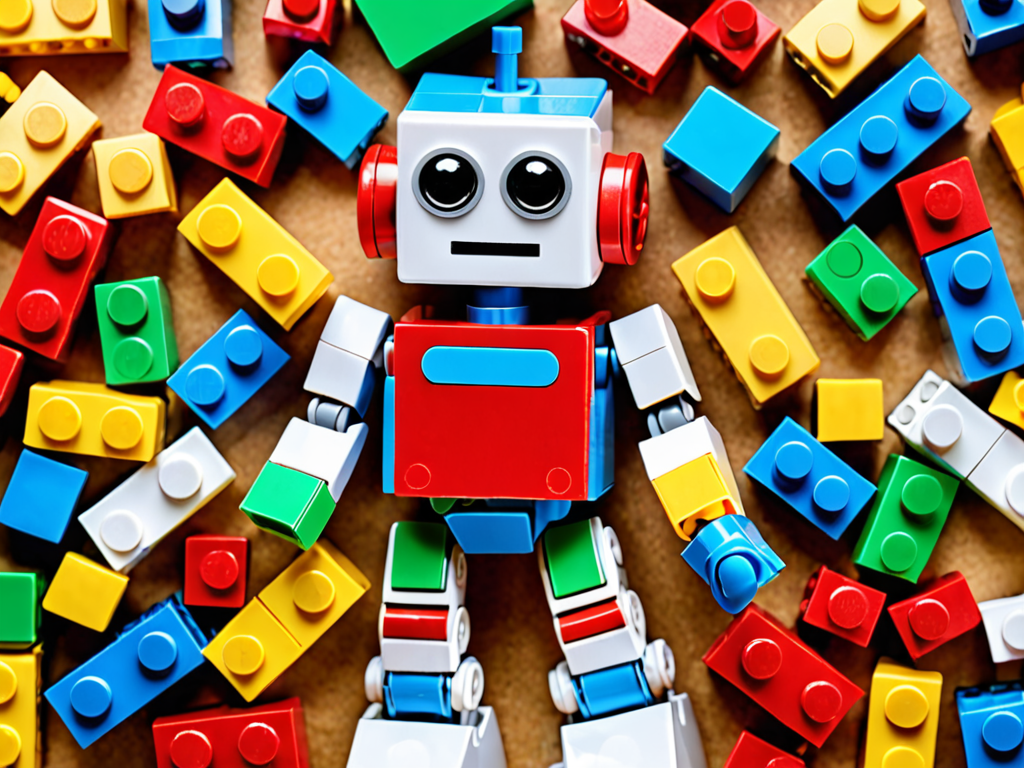
The global STEM toys market is projected to surpass $12 billion by 2027, driven by parents who want playtime to double as learning time. STEM — Science, Technology, Engineering, and Math — has evolved from a buzzword into a full-fledged product category that retailers, wholesalers, and ecommerce sellers can't afford to ignore.
But not all "STEM" labels deliver real educational value. This guide breaks down what makes a genuine STEM toy, how to match toys to developmental stages, and what wholesale buyers should look for when sourcing STEM products from manufacturers.
What Makes a Toy "STEM"? — Beyond the Label
The term "STEM toy" is not regulated. Any manufacturer can slap the label on a box. Truly educational STEM toys share these characteristics:
- Open-ended problem solving — The toy presents a challenge with multiple possible solutions, not a single "correct" answer. Building sets, circuit kits, and coding robots are classic examples.
- Hands-on experimentation — Kids learn by doing: mixing materials, testing hypotheses, observing results. Science kits and engineering construction sets excel here.
- Progressive difficulty — The best STEM toys grow with the child. A 4-year-old stacks magnetic tiles; an 8-year-old designs complex geometric structures with the same set.
- Real-world connections — Toys that mirror actual STEM careers — coding, robotics, architecture, chemistry — give kids a tangible sense of what scientists and engineers do.
- Failure is part of the fun — Good STEM toys normalize trial and error. Structures collapse, circuits don't light up on the first try, and that's the point.
⚠️ Watch Out: Avoid "STEM-washing" — toys that claim educational value but are essentially passive. A tablet app with flashy graphics isn't STEM unless the child is creating, experimenting, or problem-solving. Look for toys where the child is the active agent, not a passive consumer.
STEM Toys by Age Group: What Works at Every Stage
Ages 1-3: Sensory STEM Exploration
Toddlers learn through their senses and motor skills. STEM at this stage means cause-and-effect, object permanence, and simple construction:
- Stacking and nesting toys — Teaches spatial reasoning, balance, and size gradation
- Water play sets — Pouring, measuring, and floating experiments introduce basic physics
- Large building blocks — First engineering challenges with chunky, graspable pieces
- Shape sorters and simple puzzles — Early pattern recognition and problem-solving
Ages 3-5: Preschool Engineering and Discovery
Preschoolers are ready for more structured STEM play. Their fine motor skills and attention spans support longer experimentation:
- Magnetic building tiles (Magna-Tiles style) — 2D patterns become 3D structures; geometry becomes intuitive
- Simple machines sets — Gears, levers, pulleys, and wheels teach mechanical principles
- Beginner coding robots — Screen-free robots like Bee-Bot teach sequencing and logic without screens
- First science kits — Color mixing, simple chemical reactions (baking soda volcanoes), and magnifying glass exploration
Ages 5-8: Elementary STEM — Coding and Construction
School-age kids can handle more complex concepts and tools. This is the sweet spot for coding toys and engineering kits:
- LEGO-compatible engineering sets — Motors, gears, and programmable elements
- Circuit building kits — Snap Circuits-style electronics that teach conductivity, resistance, and logic gates
- Coding robots with app integration — Sphero, Ozobot, and similar teach block-based programming
- 3D printing pens and beginner design software — Introducing additive manufacturing concepts
Ages 8-12: Advanced STEM — Robotics and Real Programming
Tweens are ready for real-world STEM challenges. This age group demands sophistication and authenticity:
- Arduino and Raspberry Pi starter kits — Real electronics and programming languages (Python, C++)
- Robotics competition kits — VEX, FIRST LEGO League compatible builds
- Chemistry sets with real lab equipment — Microscopes, glassware, and guided experiments
- Drone building and coding kits — Aerodynamics, flight control, and camera systems
Why STEM Toys Are a Goldmine for Wholesale Buyers and Retailers
If you're sourcing toys for retail, Amazon FBA, or your own brand, STEM is one of the strongest categories in 2026. Here's why:
1. Higher Price Tolerance from Parents
Parents consistently pay 20-40% more for toys they perceive as educational. A $15 building block set might sell for $25-35 when positioned as a "STEM engineering kit." The educational framing justifies premium pricing.
2. Year-Round Demand (Not Just Christmas)
Unlike seasonal toy categories, STEM toys sell steadily throughout the year. Birthday parties, summer enrichment, homeschooling curricula, and classroom purchases create consistent demand cycles.
3. Strong Repeat Purchase Behavior
STEM toy lines with progressive difficulty levels (Level 1 → Level 2 → Level 3) create natural upgrade paths. A parent who buys a beginner coding robot at age 5 is likely to return for the advanced version at age 8.
4. High Giftability — Grandparents Love STEM
Grandparents and relatives gravitate toward "smart" gifts. STEM toys dominate gift guides and have above-average conversion rates from search terms like "educational gift for 7 year old boy."
💡 Pro Tip for Sellers: Bundle complementary STEM toys into "learning kits." A magnetic tile set + a geometry activity guide + a storage case can command a 50-80% higher basket value than the tiles alone. Educational bundling is one of the highest-ROI strategies in the toy space.
Sourcing STEM Toys from China: What Wholesale Buyers Need to Know
China manufacturers approximately 80% of the world's STEM toys, from magnetic building tiles to programmable robots. Here's what to prioritize when sourcing:
- Safety certifications are non-negotiable — STEM toys involving electronics, magnets, or small parts require rigorous testing. Insist on ASTM F963 (US), EN71 (EU), and CPC documentation. Magnetic toys have additional swallow hazard requirements under 16 CFR Part 1240.
- Electronic component quality varies wildly — Circuit kits, coding robots, and motorized sets contain batteries, wires, and PCBs. Cheap components mean high return rates. Request component-level specs and test samples extensively.
- 3D printing enables low-MOQ STEM innovation — New STEM toy designs can be prototyped and produced in small batches (100-500 units) via 3D printing, avoiding the $5,000-20,000 mold costs of injection molding. This is ideal for testing new concepts before scaling.
- Packaging must explain the learning value — STEM toys need packaging that communicates age-appropriateness, skills developed, and what's included. Work with manufacturers who offer in-house packaging design or can execute your design files precisely.
URMYWO's manufacturing facility in Shenzhen combines traditional injection molding with advanced 3D printing, enabling both high-volume STEM toy production and low-MOQ custom designs. Our in-house QC team tests every electronic component before assembly.
🔬 Looking for a STEM Toy Manufacturing Partner?
Whether you need 500 units of a custom coding robot or 10,000 magnetic building tile sets, we can help. Full certifications, competitive pricing, and DDP shipping included.
Request STEM Toy Quote →