A plush toy has one failure mode. A battery toy has four — electrical, thermal, chemical and radio — and every one of them is a recall category. Here is how to buy them without inheriting the risk.
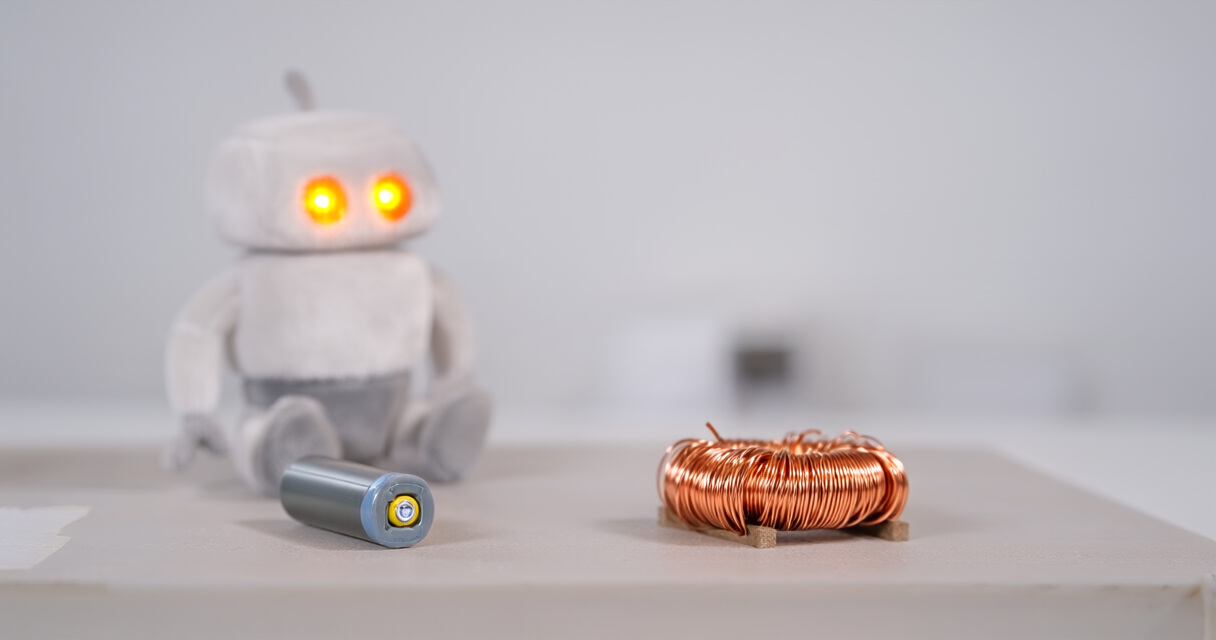
Battery-operated and electronic toys carry the best margins in the category and the worst downside. A defect in a wooden puzzle is a refund. A defect in a lithium-powered toy is a fire report, a recall and a letter from a regulator.
Most importers who get into this category treat it as an extension of plastic toy sourcing: same factory, same process, add a battery box. That is exactly how the failures happen. The electrical subsystem is bought from different suppliers, validated against a different standard set, and shipped under different transport rules. Each of those is a separate thing that can go wrong after your goods leave the port.
This guide covers what an electronic toy actually consists of, how to choose the battery, the design details that decide your recall exposure, the certification stack per market, and where the cost really sits.
Four risk layers sit on top of the ordinary toy risk, and they behave differently under stress.
Electrical. A short, a reversed cell, a marginal solder joint, or a charger that pushes the wrong current. These show up as dead-on-arrival units first, then as intermittent faults, then as heat.
Thermal. Lithium cells vent, swell, or in the worst case ignite. A toy that gets left in a car in July, or on a shelf under a window, is the test case nobody runs in the lab.
Chemical. Button and coin cells are a specific hazard because of size and shape, and the regulatory response to them has become much stricter in both the US and the EU. Lead, phthalates and heavy metals still apply on top of that through the ordinary toy rules.
Radio. As soon as a toy transmits — Bluetooth, 2.4GHz remote, Wi-Fi — you are no longer only selling a toy. You are selling radio equipment, with its own authorisation regime, its own test suite, and its own paperwork.
The pattern that costs the most money: a brand sources the toy from a toy factory, the electronics from an electronics house, and never assigns anyone to own the interface between them. The toy factory certifies to the toy standard. The electronics house certifies to the EMC standard. Nobody certifies the assembled product. That is the file a customs officer or a regulator will ask for.
An electronic toy is four purchases bundled into one purchase order. Price them separately, because they come from different places and move at different speeds.
Ask your factory which of those four they make in-house and which they buy. The answer tells you where quality control actually stops, and it tells you what you are responsible for testing yourself.
Battery chemistry drives the enclosure, the certification scope, the freight cost and the age grading. Decide it at concept stage, not at BOM review.
| Option | Typical use | Cost profile | Main risk | Shipping / compliance burden |
|---|---|---|---|---|
| AA / AAA alkaline (user-replaceable) | Low-cost electronic toys, sound books, simple motor toys | Cheapest unit; battery often not included | Leakage in storage; compartment accessible to small children | Lowest — no lithium transport rules if cells ship separately or not at all |
| Button / coin cell (CR2032 class) | Sound modules, light-up features, small plush | Very cheap | Ingestion hazard — the single most regulated battery format in toys | Child-resistant compartment and packaging duties apply; check current national rules |
| Sealed Li-ion pouch with USB charging | RC toys, robots, AI companions, anything with a motor and runtime | Highest BOM, but no cell replacement complaints | Thermal runaway, swelling, charger faults | Highest — transport testing, state-of-charge limits, safety marks, ageing stock |
| NiMH pack | Higher-current motor toys where lithium is avoided | Mid | Self-discharge, cell mismatch in packs | Moderate — still regulated as dangerous goods in some modes |
| No battery — USB-powered or supercapacitor demo | Retail display, sample units | Low | Product feels incomplete in use | Lowest of all |
Two practical rules from doing this repeatedly.
If the target age is under three, avoid coin cells entirely. The regulatory burden around button batteries is rising in every major market and the ingestion risk is the kind of thing that ends a brand. A different sound module costs cents. A recall costs the company.
If you go lithium, buy the pack, not the cells. A pack with an integrated protection circuit, a proper connector and documented test reports is more expensive per unit and dramatically cheaper per incident. Loose cells soldered by hand into a toy factory's housing is where thermal incidents originate.
This is the least glamorous section of this article and the one that matters most. Most battery-toy recalls I have seen traced back to a compartment, not to a cell.
What has to be true:
The design review question that saves the most money: "Show me the compartment with the door removed and a cell installed backwards." If the answer involves a drawing rather than a physical sample, you are about to approve something nobody has held.
Electronic toys sit at the intersection of toy law and electrical law. Both apply. Budget for both.
| Market | Toy safety | Electrical / EMC / radio | Chemical & other | Marking |
|---|---|---|---|---|
| United States | ASTM F963 as mandated by CPSIA; children's product certificate for the finished item | FCC equipment authorisation for anything that radiates or transmits; battery-operated toy clauses in the toy standard | CPSIA lead and phthalate limits; state-level chemical warning rules; button-cell packaging rules | Tracking label, age grading, warnings, responsible party identified |
| European Union | EN 71 series, with the new Toy Safety Regulation replacing the old Directive — verify transition dates in the official text | EN/IEC 62115 for electric toys; EMC and, for transmitters, the Radio Equipment Directive | REACH, RoHS for the electronics, batteries regulation, packaging rules | CE mark, technical file, EU responsible person, WEEE and battery producer duties |
| United Kingdom | Designated toy standard, broadly aligned with EN 71 today — confirm current status | UK electrical and radio requirements, aligned but separately administered | UK REACH and equivalent chemical limits | UKCA marking and a UK responsible person |
| Canada | Toy Regulations under the Canada Consumer Product Safety Act | ISED certification for radio devices | Surface coating and toxicology limits | Bilingual labelling, importer identification |
Three things people get wrong here.
They test the toy, not the product. The certificate has to cover the unit that ships, with its electronics, in its packaging. A test report on the plastic shell alone is not a certificate for an electronic toy.
They assume a module certificate transfers. If you buy a certified Bluetooth module and change the antenna layout, the enclosure or the firmware's transmit behaviour, the original certification may no longer describe your product. Ask the module supplier in writing what a design change does to the approval.
They forget the battery in transit. Lithium cells and packs are regulated dangerous goods when shipped — testing to the UN transport standard, documentation, and for air freight a state-of-charge limit on standalone cells. Your forwarder will ask for paperwork you do not have if nobody planned for it. Our testing cost guide covers what the lab invoices look like and how to budget the whole compliance file.
The moment a toy connects to a phone, you have taken on a software lifecycle that is longer than your product lifecycle.
Three questions decide whether that is manageable.
What happens when the app is discontinued? If the toy is a brick without an app, you are selling a product with a built-in expiry date. Specify a local fallback mode — buttons that still work, sounds that still play — so the hardware retains value when the software does not.
What data leaves the toy? Voice recordings, camera frames, usage patterns. Children's data is the most tightly constrained category in both the US and the EU, and consent rules for minors differ from ordinary consumer data. Decide what you collect, minimise it, and write it down before the factory builds the firmware.
Who can push an update? Over-the-air updates are a security requirement and a liability. A signed update path with a rollback is table stakes; an unsigned one is a way for someone else to change what your product does.
For connected and AI-driven toys specifically, our AI companion toy sourcing guide goes deeper on the privacy and safety architecture. Do not launch a connected toy with a firmware plan you have not read end to end.
Ordinary toy approvals are: pre-production sample, golden sample, mass production, inspection. Electronic toys need more gates, because electrical faults are invisible at the cosmetic level.
If your factory does not have an end-of-line electrical test fixture, they are not an electronic toy factory — they are a plastic factory assembling electronics. Our inspection guide covers how to build the AQL plan around that.
Importers tend to benchmark electronic toys against plastic toys per gram. That comparison fails, because the cost is not in the plastic.
| BOM line | Share of unit cost (typical) | What moves it | Where to save |
|---|---|---|---|
| PCB assembly | Significant, and volatile | Component count, MCU choice, board layers, connector type | Fewer features at launch; standard modules instead of chip-down |
| Battery + protection | Meaningful on rechargeable, small on alkaline | Capacity, protection circuit, certification, brand of cell | Size the pack to actual runtime, not to the spec sheet headline |
| Motor / speaker / sensors | Moderate | Torque, tolerances, brand, quantity | Buy standard catalogue parts; avoid custom tooling on motors |
| Plastic housing and tooling | Moderate, front-loaded | Cavity count, finish, number of parts, assembly labour | Fewer parts; design for snap-fit instead of screws where legal |
| Compliance testing | Small per unit at volume, large at low volume | Number of markets, number of SKUs, radio or not | One SKU, one market, one launch — then expand |
| Freight | Higher than plastic toys | Lithium classification, mode, cube efficiency | Design the carton early; lithium paperwork done once, correctly |
The savings that actually work are architectural, not negotiated. Choosing a certified module over a custom radio design can remove a whole test campaign. Choosing alkaline over lithium can remove a transport documentation burden. Choosing one SKU for one market for the first run keeps the compliance file small enough to actually finish.
Ask these in writing and keep the answers. They are the difference between a supplier and a partner.
If a supplier answers all seven without flinching, you have found someone who has shipped electronic toys before. If two or three answers are vague, the gap is where your risk lives.
The cheapest risk reduction in this category: buy one unit of a competitor's product, take it apart, and look at how they solved the battery compartment, the strain relief and the screw. Twenty years of design review compressed into an afternoon with a screwdriver.
Electronic toys are a compliance product with a toy attached, not a toy with electronics added. The battery chemistry, the compartment design and the certification file are decided long before the factory quotes a unit price — and each of them is far cheaper to get right at concept stage than to fix after the first container lands.
If you take one thing from this article: do not let the toy factory and the electronics house each certify their own half. Somebody has to own the assembled product, in writing, with the test report in the importer's name. That person is you.
Send us the concept, the target age and the markets you intend to sell into. We will tell you which battery route is realistic, what the certification scope looks like, and where the cost traps are — before you commit to tooling.
Discuss Your Product →