Smart companion robots and AI plush are the fastest-moving segment in toys — but they carry data-privacy risk that no other category has. How to source them safely, compliantly, and profitably.
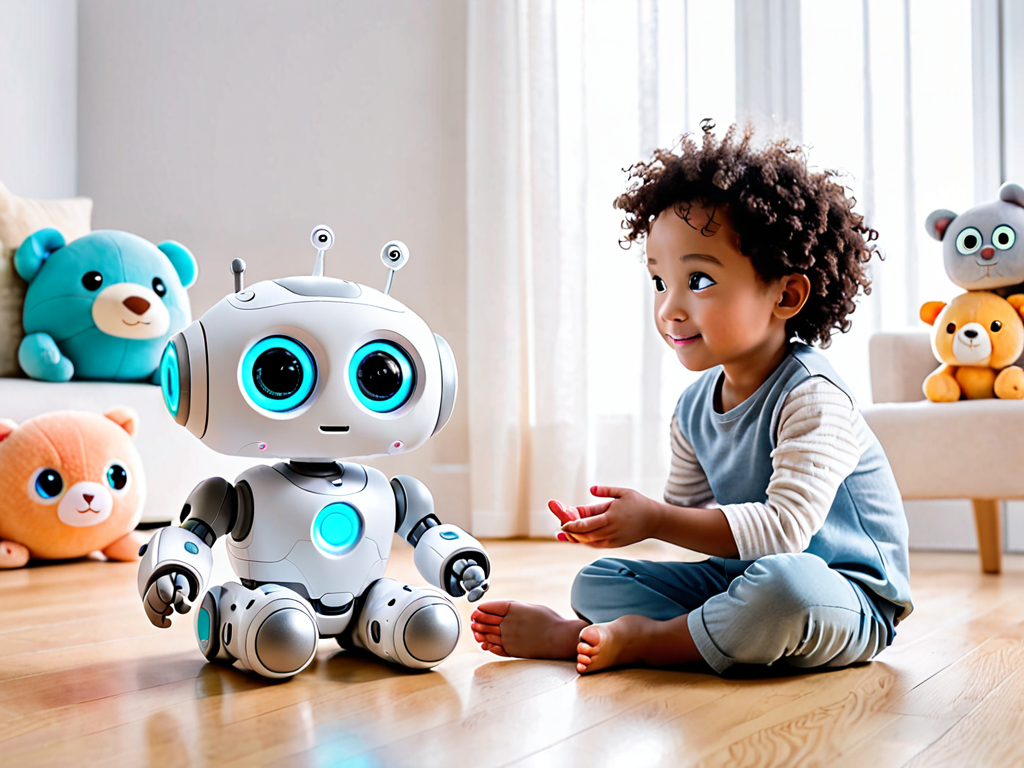
The toy industry has found its next engine. AI companion toys — plush animals and desktop robots that hold conversations, tell stories, and learn a child's preferences — grew from a curiosity into a multi-billion dollar category in under three years. Miko's companion robots and BubblePal-style AI plush have proven the demand: parents are paying $60-200 for a toy that talks back, and retailers can't keep the top SKUs in stock.
But there's a catch that every other toy category avoids: an AI toy is a data-collection device. It has a microphone, sometimes a camera, often a cloud backend — and when you're importing for the US or EU, that turns a simple toy order into a compliance exercise with real legal teeth. This guide covers what's actually driving the category, what the COPPA 2025 rule changes mean for importers, and how to source AI toys that clear customs, pass retail compliance review, and survive a privacy audit.
📊 The Opportunity: The global AI toy market is projected to grow from roughly $2.8 billion in 2025 to over $6 billion by 2027 (~45% CAGR). Companion robots and AI plush are the two fastest sub-segments. Crucially, 65-70% of purchases are made by parents for children aged 3-8 — the exact demographic that makes COPPA (US) and GDPR-K (EU) apply to your supply chain.
Smart toys aren't new — connected dolls and app-controlled robots flopped in the 2010s. What changed is the large language model (LLM). Previous generations relied on scripted dialogue trees that repeated after an hour of play. Today's companion toys run on LLM backends that hold open-ended conversations, remember context, and feel genuinely responsive. That's the difference between a gimmick and a product kids form attachments to.
What's selling in 2026:
💡 Pro Tip: The fastest-selling SKUs in 2026 combine a physical toy with a phone-connected AI service. That hybrid model means the toy itself can be low-cost to manufacture, and the recurring revenue lives in the app/service layer. For importers, this is attractive: the hardware MOQ is modest, and the "software" side is handled by a partner — you're selling the box, the experience, and the margins.
In April 2025, the FTC finalized significant updates to the Children's Online Privacy Protection Act (COPPA) rule — the first major revision in over a decade. These changes directly shape what you can import, how the device must behave, and what documentation your factory or brand partner must provide. For importers, the practical consequences land in five areas:
⚠️ Watch Out: COPPA enforcement is intensifying. The FTC has been explicit that toys are a priority area, and non-compliance penalties run up to $51,744 per violation — and a connected toy can generate thousands of violations per day of operation. Importers aren't automatically liable for a brand partner's privacy violations, but retailers increasingly require evidence of compliance (privacy policies, consent flows, data-deletion mechanisms) before they'll list your product. If you can't produce that documentation, you can't sell.
The COPPA pressure has produced a clear product architecture winner for 2026-2027: on-device AI with zero data uploaded. Instead of streaming a child's voice to a cloud server, these toys run the conversation model on the device itself (or on the parent's phone, with audio never leaving the device).
Why this matters commercially, not just legally:
📊 Market Signal: In 2025-2026, the FTC's updated rules plus a wave of parent-privacy advocacy pushed the market toward on-device AI. Retailers including Amazon now surface privacy details prominently on smart-toy listings, and "works offline" / "no cloud" products convert measurably better in A/B tests reported by category sellers. The trend is unambiguous: privacy is now a feature, and it's often THE feature.
Not all factories can build an AI toy, and not all "AI toy" quotes are what they appear to be. When you evaluate suppliers for this category, probe these five areas specifically:
💡 Pro Tip: Ask for the data flow diagram — a simple map of where audio goes: toy → device → server → AI provider. If a supplier can't draw this on one page, they don't understand their own product. For your own brand, the ideal answer is: "Audio is processed on-device and deleted immediately; nothing is stored." That single sentence solves most of your compliance exposure.
AI companion toy pricing surprises importers because the hardware cost is only part of the story. Here's a realistic breakdown for a mid-range AI plush/companion (per-unit, at 5,000+ unit volumes):
The strategic trade-off: Cloud-based AI toys are cheaper to build ($15-25 hardware) but carry per-conversation costs, privacy complexity, and regulatory exposure. On-device AI toys cost more to build ($30-45 hardware) but eliminate ongoing costs and become dramatically easier to sell, certify, and defend. For a brand targeting the US or EU in 2027, the on-device route is usually the right call despite the higher BOM — the compliance savings and marketing advantage outweigh the extra hardware dollars.
URMYWO sits at the intersection this category needs: we manufacture the physical toy — plush, 3D printed accessories, and baby/toddler-safe bodies — and we work with electronics and AI partners to integrate the smart modules. Our role is the part most importers underestimate: getting the toy itself right — materials that survive washing, batteries that pass UN38.3, enclosures that meet EN71 small-parts and choking requirements even with electronics inside, and packaging that tells the privacy story clearly.
Contact URMYWO to discuss your hardware options — plush, robot shell, or 3D printed body — and get a realistic cost structure for your target price point.
Talk to Our Team →