📅 Published: July 13, 2026
✍️ By: URMYWO Editorial Team
🏷️ AI & Tech, Toy Design, Product Development, Manufacturing
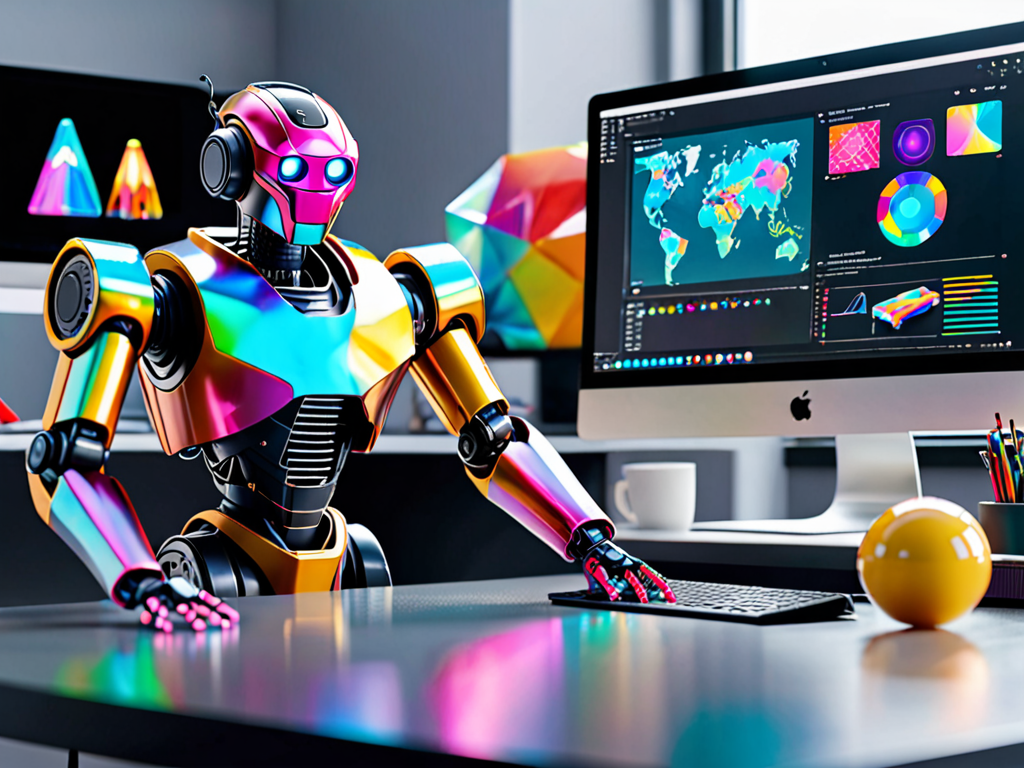
The toy industry is experiencing a design revolution. In 2026, generative AI has moved from a curiosity to a core tool in the product development workflow — slashing concept-to-prototype timelines by 60-80% and enabling small brands to compete with industry giants on creative output.
For importers, wholesalers, and private-label toy brands sourcing from China, AI tools unlock capabilities that were previously only available to companies with in-house design teams and six-figure R&D budgets. This article maps the 2026 landscape: the tools, the workflows, and the competitive advantage they provide.
How Generative AI is Changing Toy Design
Traditional toy design follows a linear path: sketch concepts → 3D model → physical prototype → refine → tooling → production. Each iteration takes weeks and costs thousands. Generative AI collapses this into hours:
- Concept generation: AI image generators (Midjourney V7, DALL·E 4, Stable Diffusion XL) produce dozens of photorealistic toy concepts from text prompts in seconds — no illustration skills needed
- 3D model generation: Tools like Meshy.ai, Luma AI Genie, and OpenAI's Shap-E convert 2D concept art or text descriptions into production-ready 3D meshes
- Market validation: AI analyzes social media trends, Amazon review sentiment, and Pinterest search data to predict which concepts will resonate before a single prototype is made
- Iterative refinement: Feed customer feedback or competitor analysis into the AI pipeline and generate improved variants in minutes
The 2026 AI Toy Design Toolkit
1. Image Generation for Concept Art
The starting point for most AI-assisted toy design is concept visualization. Key platforms in 2026:
- Midjourney V7 — Industry favorite for toy concept art. Its "style reference" feature lets you upload existing bestsellers and generate variations that fit your brand aesthetic. Prompt example: "educational wooden stacking toy for toddlers 2-4, Montessori style, natural beech wood, pastel colors, product photography on white background"
- DALL·E 4 — Best for precise control. Its inpainting and outpainting tools let you refine specific parts of a design without regenerating the whole image
- Adobe Firefly — Integrated into Photoshop and Illustrator, so existing design teams can enhance their workflow without switching tools. Strong for packaging mockups and retail display concepts
💡 Pro Tip — AI Prompt Engineering for Toys: The best toy concept prompts include: age range, material, educational purpose, color palette, and styling direction. Example: "STEM robot toy for 7 year old boy, modular snap-together parts, translucent blue plastic with LED, programmable via app, clean product shot on bright background, 3D render style." The more specific your prompt, the more actionable the AI output.
2. AI-Powered 3D Modeling
Going from concept art to a manufacturable 3D model has traditionally been the biggest bottleneck — requiring skilled CAD designers and multiple revision cycles. In 2026, AI bridges this gap:
- Meshy.ai 3.0 — Upload 4-6 AI-generated concept images and receive a textured 3D model suitable for 3D printing or as a CAD starting point. Accuracy has improved dramatically in 2026, with models now retaining 85-90% of the intended design detail
- Autodesk Fusion + AI — Autodesk's generative design tools now extend to consumer products. Describe ergonomic requirements ("safe for 3-year-old hands, no sharp edges, dishwasher-safe geometry") and the AI proposes structurally optimized forms
- NVIDIA GET3D — For brands needing hundreds of toy variants (e.g., collectible figures with different outfits, accessories, poses), GET3D generates high-quality 3D models at scale from a training set of your existing designs
3. AI Market Research and Trend Prediction
Designing a great toy is only half the battle — it needs to sell. AI tools for market validation:
- Jungle Scout Cobalt + AI — Analyzes Amazon sales data with natural language queries: "What's the fastest-growing subcategory in STEM toys under $25?" or "Show me unmet demand in wooden baby toys with 4+ star ratings"
- Exploding Topics Pro — AI-powered trend detection that surfaces emerging toy categories before they hit mainstream. Identified "fidget dragons" and "sensory busy boards" months before they saturated TikTok
- Social listening AI — Tools like Brandwatch and Sprinklr use LLMs to analyze millions of parent conversations across Reddit, TikTok, and Facebook groups, identifying unmet needs and pain points with existing toys
⚠️ Reality Check — AI Can't Replace Manufacturing Expertise: AI-generated 3D models still require manufacturing engineering review. Generative AI doesn't understand injection molding draft angles, PLA warping characteristics, or ASTM F963 safety requirements. The winning workflow is: AI generates concepts → human designer refines for manufacturability → factory reviews mold feasibility. AI accelerates the creative work; human expertise ensures the toy can actually be produced, passes safety tests, and hits cost targets.
Real-World Case Studies: AI Toy Design in Action
Case Study 1: From Idea to Amazon Listing in 3 Weeks
A solo entrepreneur used the following AI-powered workflow to launch a Montessori-inspired sensory toy:
- Day 1-2: Generated 50+ concept images in Midjourney V7, shortlisted 5 designs based on Amazon trend data from Jungle Scout
- Day 3-4: Converted top 2 concepts to 3D models via Meshy.ai, refined in Blender
- Day 5-6: 3D printed prototypes on a Bambu Lab printer, shared photos in a Facebook mom group — received 87 positive reactions on the preferred design
- Day 7-14: Sent the 3D model to a Chinese manufacturer (URMYWO) for mold-making and 500-unit production run
- Day 15-21: AI-generated product photos for the Amazon listing (using AI background removal, lifestyle scene generation), wrote listing copy with ChatGPT, and launched
Total pre-production cost: under $2,000 (including AI tool subscriptions). Traditional approach: $15,000-25,000 and 3-4 months.
Case Study 2: AI-Driven Product Line Expansion
A mid-sized toy brand with 12 SKUs used AI to identify adjacent product opportunities:
- Analyzed 10,000+ Amazon reviews of their existing products using an LLM to find common "I wish this toy had..." statements
- Top finding: Parents wanted a travel-sized version of the brand's popular magnetic building set
- AI generated 15 travel-friendly form factors; the team selected 3 for rapid prototyping
- New travel SKU launched in 8 weeks, became their #2 bestseller within 3 months
Integrating AI Into Your Toy Development Workflow
You don't need to replace your entire process. Start with these high-ROI integration points:
Phase 1: AI-Assisted Ideation (Week 1-2)
- Use Midjourney or DALL·E to generate 50-100 concept variations from a well-crafted prompt
- Run the top 10 designs through AI market validation tools
- Share the best 3-5 designs with your target audience on social media for feedback
- Cost: ~$60/month in AI subscriptions
Phase 2: AI-Accelerated Prototyping (Week 3-4)
- Convert winning concepts to 3D models via AI tools
- 3D print prototypes in-house for hands-on testing (kids actually play with them!)
- Iterate based on real-world feedback — kids are the ultimate design reviewers
- Cost: $200-800 for a quality desktop 3D printer + filament
Phase 3: AI-Optimized Manufacturing Handoff (Week 5-6)
- Share the refined 3D model and AI-generated technical specifications with your manufacturer
- Use AI to translate design requirements into manufacturing specifications (material, dimensions, tolerances)
- AI-generated packaging concepts can be developed in parallel with production
The Competitive Advantage: Speed to Market
In the 2026 toy industry, speed is the defining competitive advantage. Trends emerge, peak, and fade in weeks — not months. A brand using AI-powered design can spot a trend on TikTok on Monday, have AI-generated concepts by Wednesday, 3D printed prototypes by Friday, and a production order placed with their Chinese factory the following Monday.
Brands still relying on traditional design agencies and multi-month development cycles simply can't compete on speed. The cost advantage is equally compelling: AI tools reduce the pre-production investment from $10,000-50,000 to $500-2,000 — dramatically lowering the barrier to entry for new toy entrepreneurs.
💡 The Winning Formula for 2026: AI for speed + 3D printing for rapid validation + experienced Chinese manufacturing partner for execution. Each piece is essential. AI without manufacturing expertise produces beautiful designs that can't be produced. Manufacturing without AI wastes weeks on slow iteration cycles. The brands winning in 2026 master all three.
From AI Concept to Production Reality with URMYWO
URMYWO bridges the critical gap between AI-generated toy designs and mass production. Our manufacturing teams are experienced in working with AI-generated 3D models and concept art — we understand how to translate digital designs into injection-molded or 3D-printed products that meet safety standards and cost targets.
- AI-to-manufacturing pipeline: Send us your AI-generated concepts, 3D models, or even detailed text descriptions — our engineering team reviews for manufacturability and provides feedback within 48 hours
- Hybrid manufacturing: Combine 3D printing for complex geometries with traditional injection molding for high-volume components — get the best of both worlds
- Rapid sampling: 3D printed samples in 3-5 days for customer testing and social media content before committing to mold tooling
- Low MOQ flexibility: Start with 100-500 units to test your AI-generated design in the market before scaling to container quantities
🤖 Have an AI-Generated Toy Concept? Let's Build It
Send us your Midjourney renders, DALL·E concepts, or 3D models — we'll provide a manufacturing feasibility assessment and production quote within 48 hours. From AI idea to shelf-ready product.
Submit Your AI Concept →