📅 Published: August 17, 2026
✍️ By: URMYWO Editorial Team
🏷️ Retail, Wholesale Buying, Inventory, Small Business
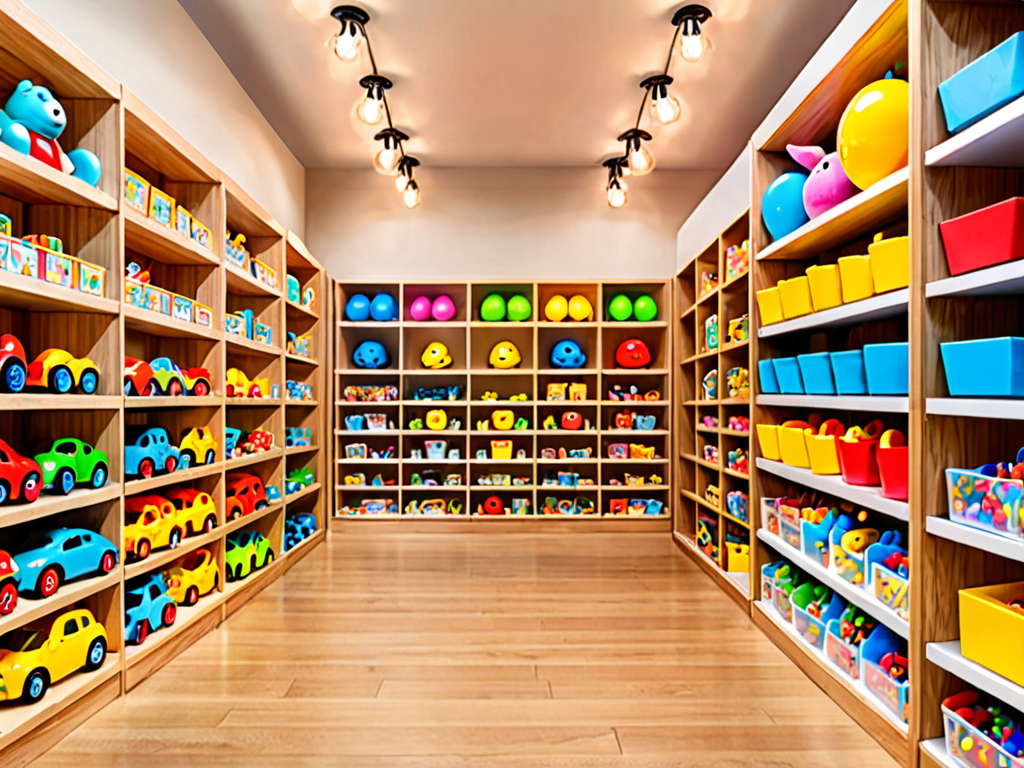
Independent toy stores are having a moment. While big-box toy retail consolidates, the number of specialty toy shops in the US and Europe has grown for six consecutive years — and the reason is simple: parents and gift-buyers will pay a premium for curation, expertise, and the experience of browsing a store that feels like a toy store should. The best independent stores run gross margins of 45-55%, and the top quartile generate $600-1,200 in sales per square foot.
But the toy business has a brutal failure mode: inventory. Toy margins are generous, but dead stock is deadly — seasonal product bought wrong can sit for a year. This guide walks through the decisions that separate toy stores that thrive from toy stores that liquidate: niche selection, margin math, wholesale buying strategy, and the inventory disciplines that keep cash flowing.
📊 Market Snapshot: The global toy market is on track to exceed $125 billion by 2027, with specialty retail growing faster than mass retail. Independent stores win on: curated assortments (72% of specialty shoppers say curation is why they shop local), unique/finding products mass retailers don't carry, and the experiential factor that ecommerce can't replicate.
Step 1: Pick a Niche That Big Box Stores Can't Serve
The graveyard of toy stores is full of businesses that tried to be "a bit of everything." A general toy store competes with Amazon and Walmart on price and loses. A specialty store competes on selection depth, expertise, and community — and wins. The niches with the strongest independent-store economics in 2026-2027:
- Montessori & educational toys: Parents actively seek guidance on developmental toys, and will pay for curation. High repeat purchase as kids age through stages. See our Montessori wholesale guide for sourcing specifics
- STEM & screen-free play: The parent pushback against screens is a durable tailwind. Kits, construction sets, and science experiments command premium prices and strong gifting demand
- Collectibles & blind boxes: The fastest-growing category in toys, with the highest repeat-purchase rate in retail. A dedicated collectibles wall or corner drives foot traffic from kids, teens, AND adults (the kidult segment is now 25%+ of toy sales)
- 3D printed & novelty toys: Products customers have never seen in a big box store. The "wow" factor generates word-of-mouth and social media posts — free marketing for your store
- Wooden & eco-friendly toys: Premium price points (eco toys still carry a 12-18% premium) and strong alignment with the values of specialty-store shoppers
💡 Pro Tip: Don't pick a niche you personally don't care about. Specialty toy retail is relationship-driven — your staff's genuine enthusiasm is the product. The most successful independent store owners we work with are the ones who could talk about their category for hours before they ever opened.
Step 2: The Margin Math That Determines Survival
Before you sign a lease, model your unit economics. Here's the honest math for a specialty toy store:
- Wholesale cost: Typical toy wholesale prices are 35-50% of retail (i.e., you buy at $5, sell at $10-14). Direct-from-factory sourcing improves this to 20-35% of retail — but requires volume and longer lead times
- Gross margin target: 45-55% blended. Some categories (collectibles, blind boxes) run 55-65%; licensed products often run lower (35-45%) because licensing fees compress everyone's margin
- Your real cost of goods: Add freight, duties (toys from China can add 5-25% depending on country and HS code), payment fees, and shrinkage (toys are small and theft-prone) — most stores under-estimate landed cost by 10-15%
- Break-even inventory: A rule of thumb: your opening inventory should be 2-3x your expected first-quarter sales, with at least 40% in "evergreen" products that sell year-round (building sets, arts & crafts, plush) and no more than 30% in seasonal products
📊 Worked Example: A 1,200 sq ft specialty store with $8,000/month rent and $15,000/month total overhead needs roughly $35,000-40,000/month in sales at 50% gross margin to break even — about $1,100/day. That means an average transaction of $35 requires just 31 transactions per day. Curation (higher average ticket) matters more than foot traffic.
Step 3: Build the Inventory Mix That Turns
Inventory turnover is the single most important metric in toy retail. The industry average is 2.5-4 turns per year; great specialty stores hit 5-6. Your mix should be built around turnover, not just margin:
- 40% Evergreen core (4+ turns/year): Building blocks, arts & crafts consumables, STEM kits, classic games, plush. These sell year-round and fund your rent
- 25% Fresh/trend items (3-4 turns/year): Blind boxes, collectibles, social-commerce-viral products, new series releases. These drive repeat visits — the collector who comes in for wave 3 also buys a birthday gift
- 20% Seasonal (2 turns/year): Holiday, summer outdoor, back-to-school. Buy tight — the #1 killer of toy store cash flow is over-buying seasonal product in year one. If you're not sure, buy 20% less than your gut says
- 10% Premium/gift (2-3 turns/year, high ticket): Wooden play kitchens, 3D printed display pieces, high-end building sets ($100-300). These lift your average transaction value and give gift-buyers a reason to choose you over Amazon
- 5% Test/novelty: Small-quantity experiments. If something works, reorder fast; if it doesn't, discount and move on — never let a test SKU become a permanent resident
⚠️ Watch Out — The MOQ Trap: Chinese factories often quote MOQs of 500-3,000 units per SKU. A new store cannot absorb that. This is why working with manufacturers that offer low-MOQ programs (100-500 units) or mixed-container wholesale is critical in year one. Buying 3,000 units of one SKU to get a good price is how new stores end up with 2,800 units of dead stock.
Step 4: Source Strategically — Distributor vs. Direct from Factory
You have three sourcing tiers, and successful stores use all three:
- Tier 1 — Local/regional distributors: Fast reorders (days, not weeks), low minimums, easy returns. Margin is thinner, but cash flow stays liquid. Use this tier for your evergreen core
- Tier 2 — Importers & wholesalers with mixed programs: Better pricing, moderate MOQs (50-500 units), and the ability to buy across categories in one container. Ideal for your fresh/trend and seasonal buckets
- Tier 3 — Direct from factory (China): The best pricing (often 30-50% below distributor), but MOQs are higher and lead times run 30-60 days plus freight. Only makes sense once you can commit volume. This is where URMYWO's low-MOQ and mixed-basket programs are designed for stores that are ready to step up
💡 Pro Tip: In year one, put no more than 30% of your open-to-buy into direct-from-factory orders. Keep 70% in fast-reorder channels. As you learn which SKUs actually turn in YOUR store, shift the ratio — by year two, successful stores are usually 50-60% direct, with reorder lead times planned into their cash cycle.
Step 5: Seasonal Buying Calendar — Buy Right or Don't Buy
Toy retail runs on a ruthless seasonal clock. Order windows for Chinese factory production close months before the selling season:
- January-March: Buy Q4 holiday product (production slots, especially for custom/private label, fill by mid-year)
- April-June: Buy back-to-school and autumn/early-holiday staples; place any private-label orders now
- July-August: Last window for Q4 holiday reorders on standard products — after September, freight and production slots get expensive or unavailable
- September-November: Holiday selling season. No speculative buying — only proven reorders
- December: Plan the January clearance (budget for it — planogram the discount wall before Christmas, not after)
For the full timing picture, including exact deadlines that still work for the 2026 holiday season, read our wholesale buying calendar for the holiday season.
Step 6: The Disciplines That Keep You Profitable
- SKU count discipline: A 1,200 sq ft store should carry 2,500-4,000 SKUs, not 8,000. Every SKU must justify its shelf space with turns or margin
- Open-to-buy discipline: Set a monthly buying budget and stick to it. The most common mistake of new owners is buying inventory with cash they'll need for rent in 90 days
- Discount cadence: Mark down at 60, 90, and 120 days of shelf life, on a fixed schedule. Slow product is a tax on your cash flow; the goal is selling it at 30-50% off instead of liquidating it at 80% off
- Data over gut: Track sell-through per SKU weekly in year one. Most POS systems do this for free — the stores that fail are the ones that never look
- Experience design: Toys are an experience category. Play tables, demo units, and a "new arrivals" wall that changes weekly drive the foot traffic that pure ecommerce can't touch
How URMYWO Supports Independent Toy Stores
URMYWO was built around the needs of independent retailers and growing brands, not just big-box importers. That means:
- Low MOQs (as low as 100-300 units on many lines) so new stores can build variety without warehouse-deep inventory
- Mixed-basket wholesale — combine 3D printed collectibles, wooden Montessori toys, and baby toys in one order to hit container economics without committing to a single category
- Differentiated products — 3D printed articulated figures, blind-box-compatible collectibles, and eco-friendly PLA toys that give your shelves the "you can't find this on Amazon" factor
- Private label support when you're ready to build your own brand — see our OEM & private label guide for how that works
🏪 Opening or Restocking a Toy Store?
Get a mixed-basket wholesale quote built for independent retail — low MOQs, curated product mix, and honest landed-cost estimates for your market.
Get a Retail Wholesale Quote →