📅 Published: August 17, 2026
✍️ By: URMYWO Editorial Team
🏷️ Collectibles, Manufacturing, Sourcing, Product Development
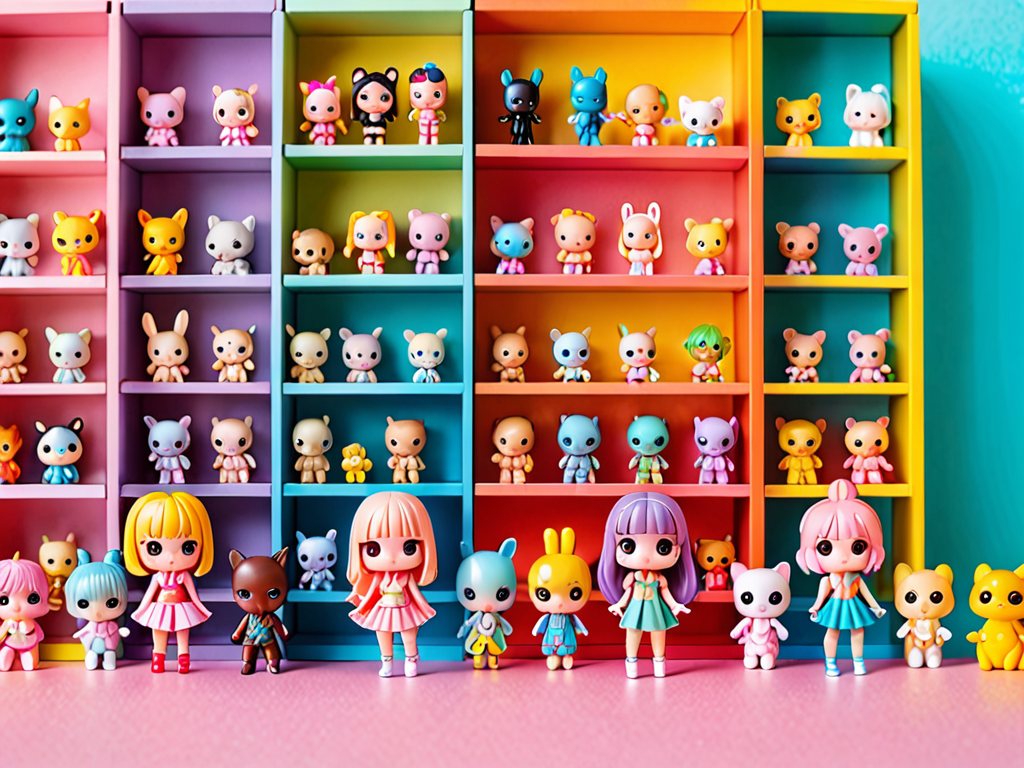
The blind box is the fastest-growing format in the toy industry — collectibles grew roughly 18% year-over-year in 2026, and blind box sales alone are projected to pass $50 billion globally by 2027. But for most importers, the product itself is a black box: how are these things actually made, and why do some blind box factories quote $0.80 while others quote $4.50 for what looks like the same figure?
This guide pulls back the curtain from the manufacturer's side. Whether you're a brand owner planning your first collectible series, an importer evaluating factories, or a retailer wondering why your blind box sell-through died after wave one — this is the production-side knowledge you need.
📊 The Opportunity: The global blind box market was valued at ~$28 billion in 2025 and is growing at a 22% CAGR. The average collector buys 8-12 boxes per series, and repeat purchase is driven by the chase mechanic — not the base product. That repeatability is exactly why retailers and brands love the format: it converts a $10 impulse purchase into a $100+ customer lifetime value.
How a Blind Box Series Gets Made: The 7-Step Pipeline
From concept to container, a typical blind box series takes 4-8 months (2-4 months if you reuse existing molds or work with a factory that has a strong in-house design team). Here is the pipeline every factory follows, and where the real costs live:
- Step 1 — Character & series design: 6-12 character designs per wave (8 is the industry standard for the base set). Factories with in-house sculptors can do this in 2-4 weeks; freelancers or design agencies take longer and cost $300-2,000 per character
- Step 2 — 3D sculpting & master model: Digital sculpting (ZBrush) followed by resin master prints. This is where the "character feel" — proportions, face, pose — is locked in. Revisions here are cheap; revisions after mold cutting are not
- Step 3 — Mold making: The single biggest fixed cost. A basic single-cavity PVC/ABS injection mold runs $3,000-8,000; a complex articulated figure with undercuts can hit $15,000-30,000. Multi-cavity molds (2-4 cavities) raise cost but are essential for high-volume SKUs
- Step 4 — Sampling: T0/T1/T2 sample rounds. Expect 2-4 sample iterations. A factory that skips samples or rushes them is a red flag — paint masks and color matching on small figures are where quality lives or dies
- Step 5 — Chase variant planning: Decide rarity ratios (1:12, 1:24, 1:96) and how the chase is physically produced — separate mold insert, alternate paint mask, or a completely separate small-run mold. This decision affects mold cost and QC complexity
- Step 6 — Mass production & painting: Injection molding plus hand or semi-automated painting. Painting is 30-50% of total unit cost for detailed figures. Spray-paint + tampo printing is standard; hand-painted details cost more per unit
- Step 7 — Packaging & assembly: The mystery box itself — carton, inner blind packaging, anti-tamper seal, and the "probability table" (the legally required odds disclosure in China and increasingly in the EU). Packaging is not an afterthought: it IS the product experience
💡 Pro Tip: Ask every factory for a "series cost breakdown" — mold cost, per-unit cost at your target volume, painting cost, and packaging cost listed separately. Factories that quote only a single "per-piece price" are hiding margin somewhere. Transparent factories are almost always better partners for collectibles, where small details determine sell-through.
Chase Ratios: The Economics of Scarcity
The chase mechanic is the engine of the blind box economy — and it's also the most misunderstood part of manufacturing. Here's how it actually works on the factory floor:
- Ratio 1:12 (standard rare): The chase figure shares the same mold family with a different paint mask or accessory. Cheap to produce — you're paying for a second paint program, not a second mold
- Ratio 1:24 (super rare): Usually a separate mold insert or a variant head/accessory. Moderate additional cost
- Ratio 1:96+ (secret/ultimate): Typically a completely separate figure, often with a different material (metallic, glow-in-the-dark, translucent). This is effectively a second product with its own mold and QC line
Critically, the ratio is a production ratio, not a retail ratio. Factories pack chase figures into the production run at the specified ratio, then randomize box packing. If a factory offers "you pick the ratio" at no cost, ask how they guarantee it — proper factories use weigh stations and packing records to maintain the ratio within tolerance, and reputable ones will document their packing process.
⚠️ Watch Out: China's 2023 "blind box regulation" (and similar rules being drafted in the EU) requires probability disclosure on packaging and restricts blind box sales to minors in some jurisdictions. Your packaging must print the odds table, and your factory must be able to document actual production ratios. Importers who skip this are exposed to customs holds and retail bans — not just fines.
Materials: PVC, ABS, or Eco-Friendly Alternatives
Material choice drives cost, feel, and compliance simultaneously. Here's the honest comparison for collectible figures:
- PVC (soft vinyl): The classic collectible material — great detail reproduction, soft-touch feel, low cost. Downsides: phthalate concerns (must be <0.1% by EU/US standards), recycling difficulty, and growing retailer resistance on sustainability grounds
- ABS (hard plastic): Stiffer, better for articulated joints and mechanical features. Common for chibi figures and transformable collectibles. Slightly higher cost than PVC
- Resin (limited editions): Premium feel, high detail, but brittle and expensive — used for display-grade statues, not mass blind boxes
- Bio-PLA / plant-based (the rising option): 3D printed or injection-molded PLA figures are biodegradable, non-toxic, and increasingly price-competitive at low-to-mid volumes. For brands that want a sustainability story without a vinyl supply chain, this is the fastest-growing niche — and it's where on-demand manufacturing shines
📊 Cost Reality Check: At 10,000-unit order volumes, a standard 7-9cm PVC blind box figure typically lands at $0.80-1.80 FOB (mold amortized), with packaging adding $0.10-0.30. The same figure in bio-PLA via 3D printing is $1.50-3.50 at 1,000-5,000 units — but requires zero mold investment, which makes it dramatically cheaper for test waves and new brands. The crossover point where injection molding wins is roughly 5,000-10,000 units per SKU.
MOQ Realities: How Small Can You Start?
The mold cost is the MOQ wall. A typical blind box MOQ matrix looks like this:
- Traditional injection molding: 3,000-10,000 units per SKU minimum, plus mold costs paid upfront. Total first-wave investment: $25,000-80,000 for a full 6-8 character series
- Hybrid (stock molds + custom paint): Many factories keep catalog molds you can repaint and rebrand. MOQ drops to 500-2,000 units. Great for testing a market before committing to custom sculpts
- 3D printed / on-demand: MOQ as low as 100-500 units per design, no mold cost. Per-unit cost is higher, but total first-wave investment can stay under $5,000 — the lowest-risk entry into the category
💡 Pro Tip: The smartest wave-one strategy we see from successful new brands: launch with a small 3D-printed test series (3-4 characters, 200-500 units) to validate designs and community demand on social media, then scale to injection molding for wave two once you have sell-through data. The test costs less than the mold for one character.
IP Licensing: The Line Between Inspired and Infringing
The fastest way to destroy a collectible brand is an IP dispute. Three rules every importer should internalize:
- Original IP is an asset, not a cost: A registered character design (trademark + design patent in your target markets) is what stops copycats from flooding your niche. File before you launch, not after you get traction
- Licensed IP needs a paper trail: If you're doing a licensed collab (anime, gaming, celebrity), the factory needs to see the license agreement. Reputable factories will refuse unlicensed production — and you want them to, because that same factory will also refuse to protect you if you're not the rights holder
- Beware the "almost identical" trap: Slightly-modified versions of existing characters are the #1 cause of customs seizures and marketplace takedowns in the collectible category. When in doubt, pay a local IP attorney for a clearance opinion — it's $500-1,500 and it saves your entire container
For a deeper dive into trademarks, design patents, and anti-counterfeiting strategy, see our complete IP protection guide for toy importers.
Quality Control: What Breaks in Blind Box Production
Collectible figures have tighter QC standards than almost any other toy category — a 2mm paint defect that's invisible on a playset is a refund trigger on a $12 collectible. The failure modes to watch:
- Paint masking shifts: Misaligned color boundaries on faces and details. This is the #1 defect. Inspect at 2-3x magnification, not by eye
- Chase ratio drift: Factories under pressure sometimes pack fewer chases than specified. Verify with a test carton or two before the full run, and audit the packing line
- Flash and seam lines: Poorly maintained molds leave plastic flash on edges. This is a QC checklist item, not a "minor imperfection"
- Box damage & tamper concerns: The blind packaging is part of the product. Squeeze-test boxes at inspection — buyers can identify contents by feel, and "box feelers" (weighing boxes) is a known retail problem that hurts the collectibility dynamic
Inspection is a skill of its own — if you're new to it, start with our practical guide to toy quality inspections in China.
How URMYWO Produces Collectibles Differently
As a manufacturer based in the Shantou toy cluster, URMYWO builds collectibles on a hybrid model: traditional injection molding for high-volume series, plus an in-house 3D printing line that makes low-MOQ test waves and bio-PLA collectible lines economically viable. That combination matters for importers because it means you can:
- Validate a series concept with a 100-500 unit 3D printed test wave before committing mold budget
- Produce chase variants and limited editions on-demand without dedicated molds, keeping rarity genuine and inventory risk low
- Offer an eco-friendly collectible line (biodegradable PLA, no phthalates) that vinyl-only factories can't match
- Iterate designs in days, not months — critical in a category where trends move quarterly
🎁 Planning a Collectible Series?
Get a transparent cost breakdown — molds, per-unit pricing, chase ratios, and packaging — from a factory that does both injection molding and on-demand production.
Request a Collectible Quote →